
Fein is slang for someone who is deeply obsessed with something. People use it for a hobby, a food, a show, a game, or a person they cannot stop thinking about.
You have probably seen it in a comment and paused for a second. It looks like a typo, yet everyone in the thread seems to know what it means.
Below, you will find the plain meaning, where it came from, real chat examples, the tone behind it, and smart replies you can use when someone calls you a fein.
Quick Answer
The fein meaning is simple: fein is casual slang for a person who is strongly obsessed with something, often used playfully for a hobby, a food, a show, or a person. It comes from the older word fiend, but online it usually sounds lighter and more joking than serious.
What Does Fein Mean?
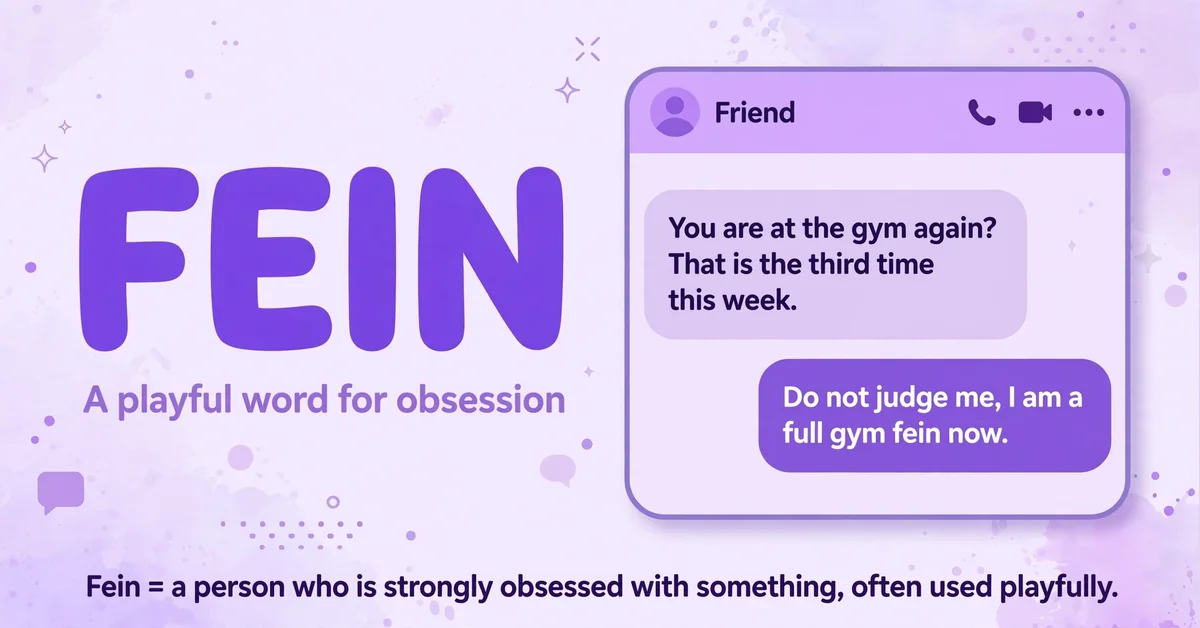
At its simplest, fein describes a playful word for obsession. It does not mean you simply like something. It means you are really into it, more than most people around you.
For example, a coffee fein is not just someone who enjoys a morning cup. It is someone who plans the day around coffee and feels off without it. A gaming fein plays for hours and keeps thinking about the next session.
The word works as a label, not a full sentence. People say “gym fein” or “music fein” to sum up a habit in two words. Like ISTG, it packs a strong feeling into a short form that fits fast chats.
Where Did Fein Come From?
Fein grew out of the older word fiend. In older use, fiend could describe a very strong craving, and that serious history is still part of the background. Modern slang has softened it a great deal, though.
Online, spellings get shortened and remixed all the time. Fiend lost a letter, picked up a casual sound, and started showing up in texts and memes. Listeners would recieve the spelling in captions and song titles, then repeat it in their own posts.
The spelling got a much bigger boost from music culture. A well known 2023 song titled Fe!n helped push the short form into captions and comment sections far beyond its original circles. Other short forms from the same era, like GNG, spread the same way.
Fein in Real Chats
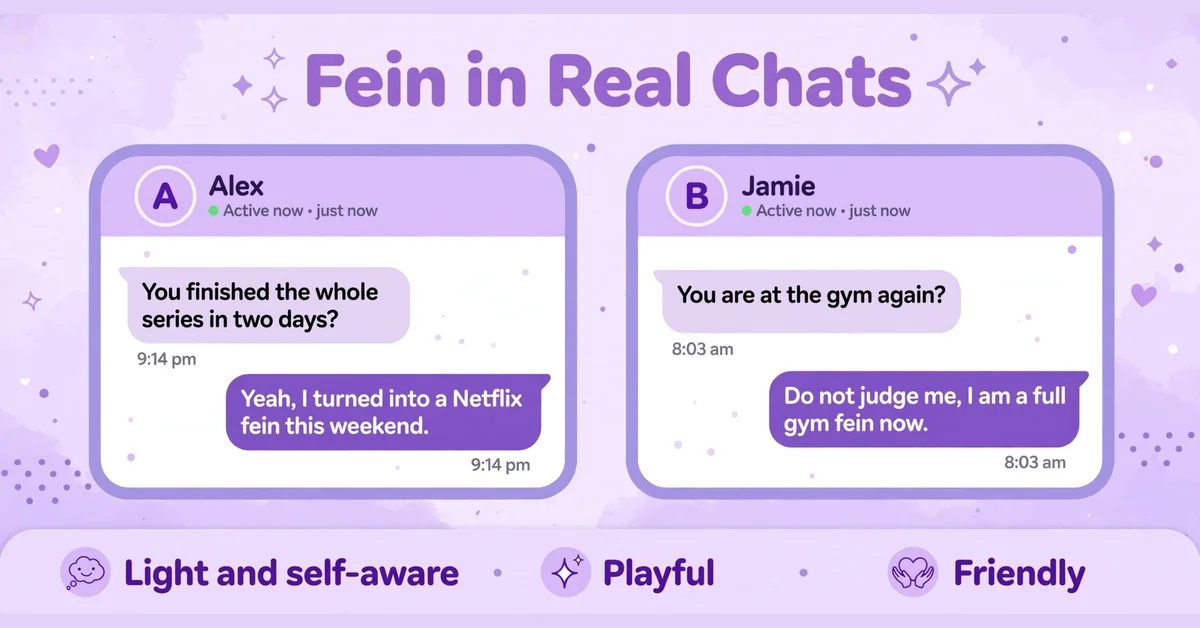
Reading examples is the fastest way to get fein, because tone changes everything with this word. Here are chats you might actually see:
Friend: “You are at the gym again? That is the third time this week.” Reply: “Do not judge me, I am a full gym fein now.”
Friend: “You finished the whole series in two days?” Reply: “Yeah, I turned into a Netflix fein this weekend.”
Notice how each reply is light and a little self aware. Nobody writes an essay about the habit. They own it in one short line, and the joke lands because the other person already knows the pattern.
What Fein Really Signals
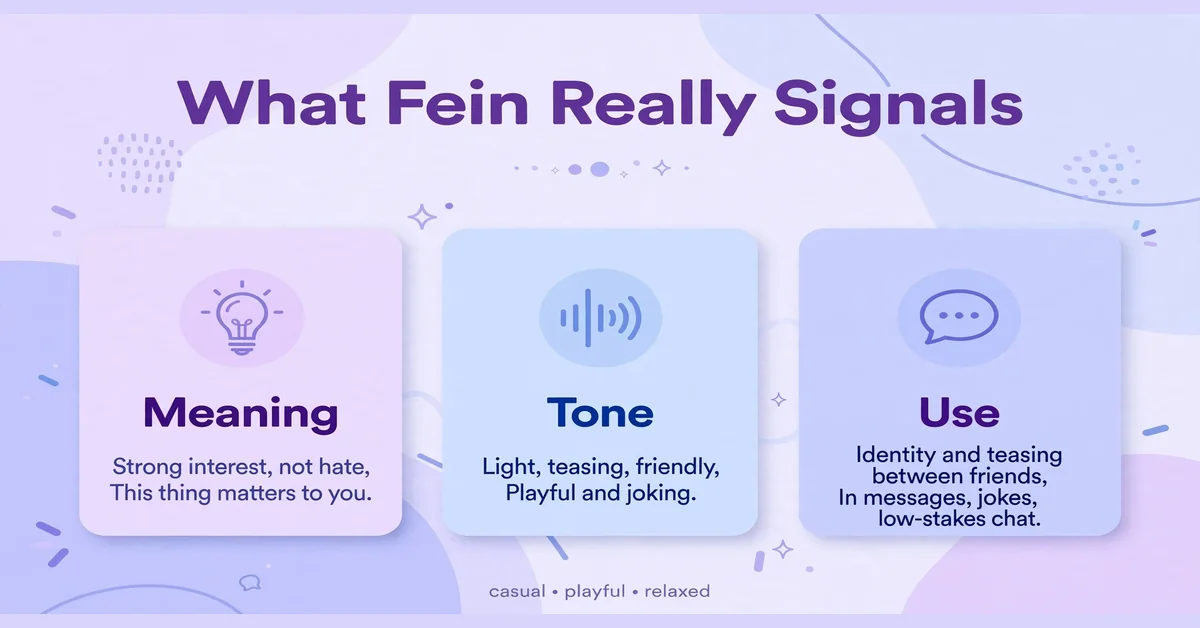
Behind the joke, fein usually signals strong interest, not hate. It says this thing matters to you, it takes up space in your day, and you are not shy about it.
First, it can signal identity. Calling yourself a coffee fein is not only about coffee. It is about routine and a small daily ritual you enjoy. Second, it can signal teasing between friends, where one friend points out a habit and the other laughs and accepts the label.
Fein vs Fiend and Other Short Replies
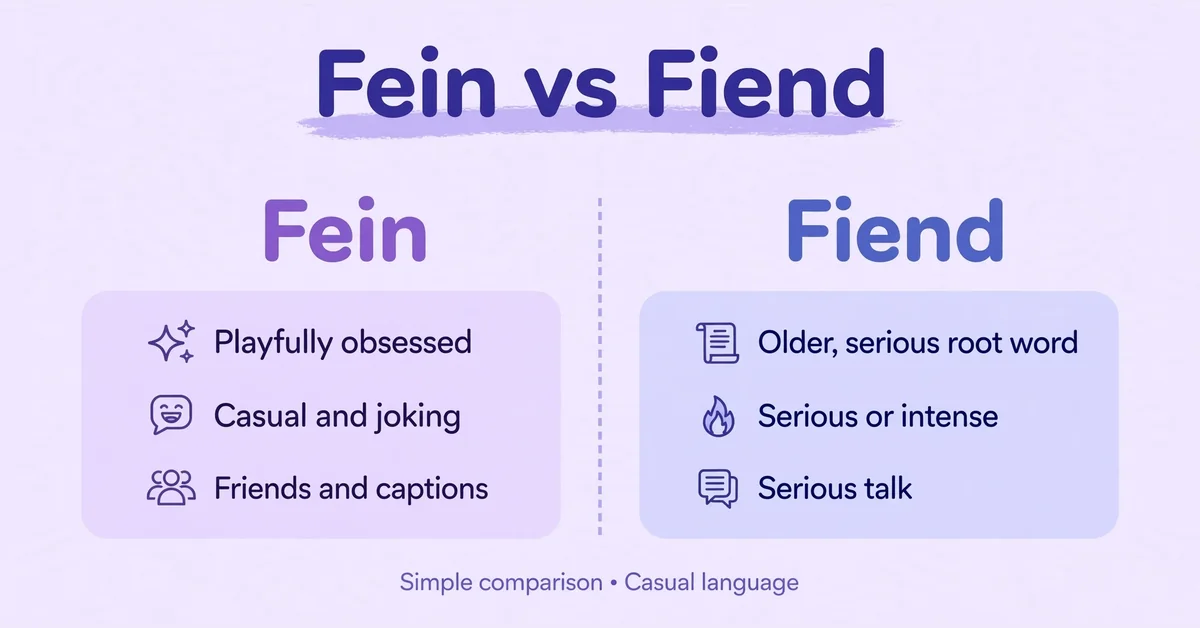
People mix fein up with nearby words, but each one does a different job. In short, fein is the lighter version of a much heavier older word.
| Term | Meaning | Tone | When to use it |
|---|---|---|---|
| Fein | Playfully obsessed | Casual and joking | Friends and captions |
| Fiend | Older, serious root word | Serious or intense | Serious talk |
| Fan | Likes something a lot | Neutral and safe | Everyday talk |
| Enthusiast | Deep interest | Polite | Work and hobbies |
The main mix up is fein versus fiend. Fiend sounds heavy and old fashioned, and it can sound harsh in a light chat. Fein sounds current and joking, which is why it fits social media so well. Short slang like HN works the same way: a tiny word with a very specific job.
Common Fein Variations
People build new versions of fein by putting a topic in front of it. Each version adds a seperate shade of meaning, and gym fein is one of the most common ones you will see online.
- Gym fein: someone who trains often and talks about fitness a lot.
- Coffee fein: someone who needs coffee to start the day.
- Gaming fein: someone who plays for long sessions and follows every update.
- Netflix fein: someone who binge watches shows and finishes seasons fast.
- Food fein: someone who is always craving snacks or planning the next meal.
- Music fein: someone who listens all day and shares songs constantly.
The word before fein tells you the habit. That simple pattern is why new versions keep appearing.
How to Reply When Someone Sends Fein
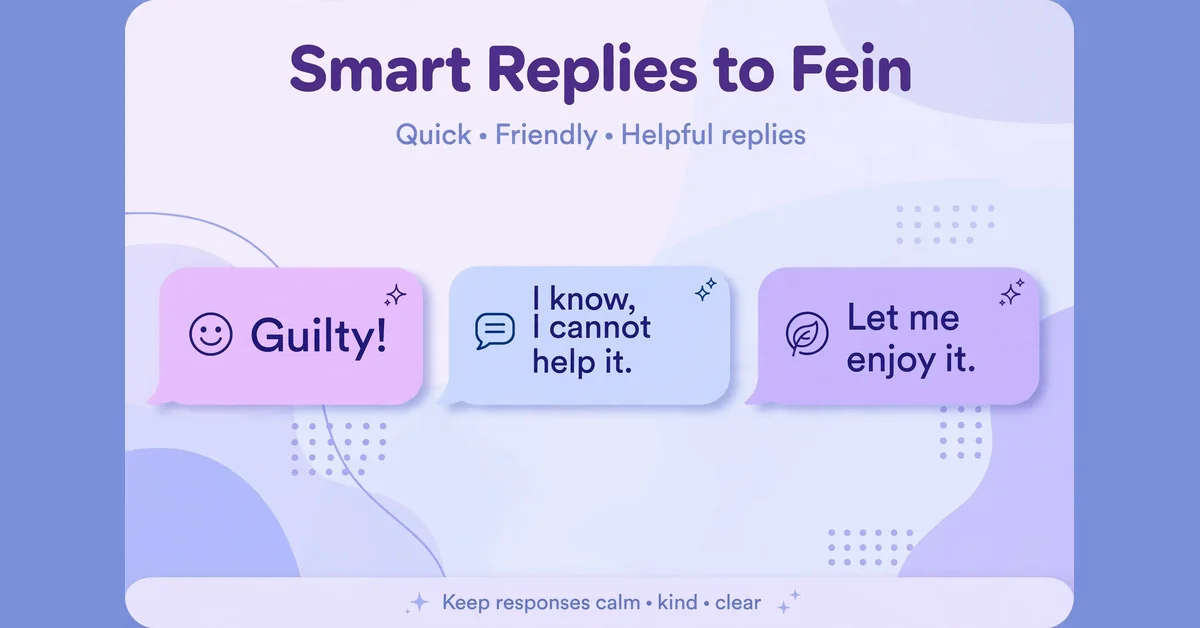
The best reply is one that matches their tone. If they were joking, stay light. If they were a little serious, stay calm and kind.
Casual replies: “Guilty.”, “I know, I cannot help it.”, “Let me enjoy it.”
Funny replies: “Certified fein since last year.”, “It is not obsession, it is dedication.”
Confident replies: “Yeah, I really love it.”, “I just like what I like.”
Do not argue with a light fein comment in the same message. If the habit truly matters, ask one calm follow up question later instead of turning a joke into a debate.
When Not to Use Fein
Skip fein in formal or sensitive settings. In a job interview, a work email, or a serious talk about health, it can sound careless even if you meant it as a joke.
Also avoid it when someone is talking about a real struggle. A short slang label can feel dismissive in that moment. Short slang like SN belongs in casual chats, not in serious ones, and fein follows the same rule.
FAQs
Is fein a real word?
Not in the formal sense. It is slang, not a formal word, and it comes from the older word fiend. It is widely understood in online chats and comments, even if dictionaries do not list it on its own.
Does fein always mean something bad?
No. Most of the time, it is playful. It usually means strong interest or a fun obsession, not a serious problem. Tone and context decide whether it sounds kind, teasing, or concerned.
Is fein the same as fiend?
They share a root, but they do not feel the same. Fiend is older and heavier, while fein is shorter, lighter, and made for casual online talk.
Can I use fein at work?
Better not to. It reads as informal slang, and a manager or client may take it the wrong way. In a work chat, say “I am really passionate about this” instead.
Final Thoughts
Fein is a small word with a clear job: it turns strong interest into a joke friends can share. Once you know it means deep obsession in a playful sense, the only skill left is reading the room before you send it.
Use it with friends and in light chats, and it will feel natural. Use it in a formal or sensitive moment, and it can land wrong. In the end, tone decides everything about what fein really says.