
FYM means fuck you mean. It is a short, blunt slang reply people send in chats when something sounds surprising, confusing, or hard to believe, and they want a quick explanation right away.
You have probably seen it in a comment or a group chat and paused for a second, trying to work out if the person was joking, annoyed, or just shocked.
Below, you will find where it came from, real chat examples, what it signals about tone, and calm replies you can send back.
Quick Answer
The fym meaning is simple: FYM is a blunt, casual way of asking what someone means, used in texting and social media when a message sounds surprising, confusing, or unbelievable. It carries attitude, so its tone depends on who sends it and how close you are to them.
What Does FYM Mean in Chat?
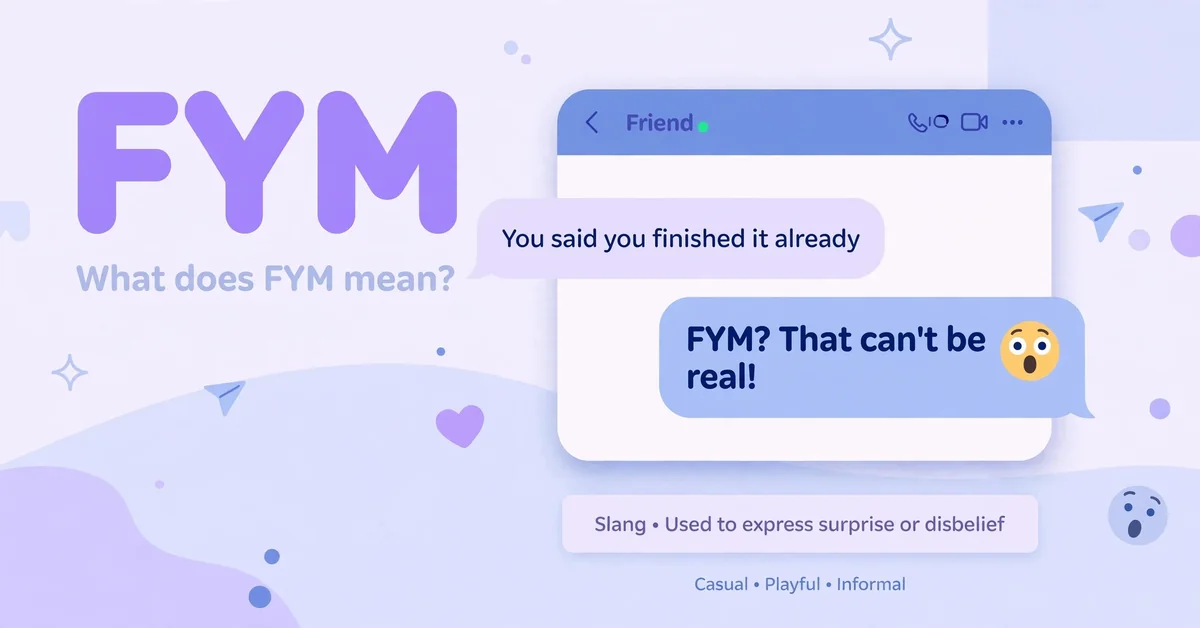
FYM is a three letter shortcut for a blunt question. In plain terms, it works out to “what do you mean, with attitude”, and people use it when a normal “what?” does not feel strong enough.
The letters break down simply. F stands for the swear word, Y for you, and M for mean, making a sharp version of asking someone to explain themselves.
It is not a question about facts only. It is a reaction to something that did not make sense, or did not match what the sender expected.
That is why the same three letters can sound funny in one chat and tense in another. Like ISTG, the feeling behind the letters matters more than the letters themselves.
Where Did FYM Come From?
FYM grew out of spoken slang before it became text slang. The phrase was already common in fast, expressive conversations among friends.
From speech, it moved into texting, then into comments and DMs on Instagram, TikTok, and X, where a three letter reaction fits perfectly.
It also spread through memes and reaction videos, where a shocked reply gets more laughs than a long explanation. People started to recieve it far from where it began, and the meaning stayed the same.
Other short forms from the same world, like GNG, followed a similar path from everyday talk to every social app.
FYM in Real Chats
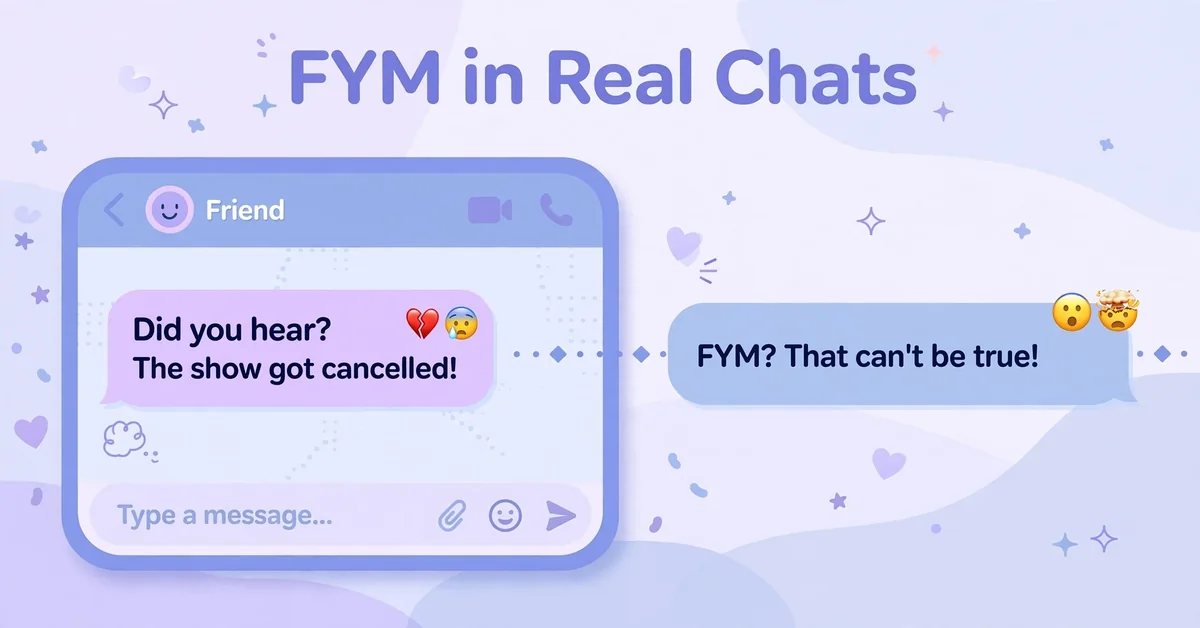
Examples make FYM easier to read, because context changes the whole message:
Cancelled plan: “I am not coming to the party anymore.” Reply: “FYM? You already said yes.”
Surprising news: “I quit my job today.” Reply: “FYM you quit? What happened?”
Playful teasing: “I beat you again, easy.” Reply: “FYM easy? I let you win the first round.”
Notice the pattern. In every case, the sender wants an explanation, and they want it now. The first two feel shocked, the third feels like banter, and that is where tone starts to matter.
What FYM Really Signals
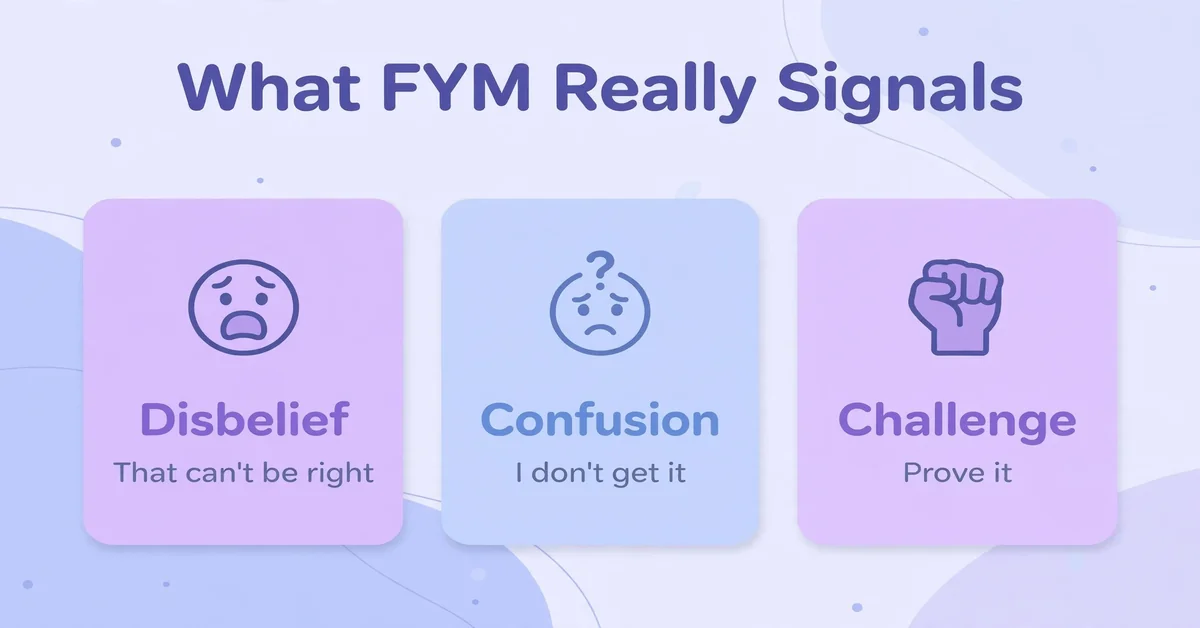
Behind the bluntness, FYM usually signals one of three things. The most common one is genuine disbelief, the feeling that something cannot be true.
First, it can mean confusion: the person did not follow what was said and wants a clearer version. Second, it can mean a challenge: they disagree and want the other side to back it up.
Third, it can mean closeness. Between good friends, a sharp reply can be a joke. With strangers, the same reply can land as rude.
Look at what comes after it to read it well. An emoji or a follow up question usually softens it. A bare “FYM?” usually feels sharper.
FYM vs WDYM and Other Short Replies
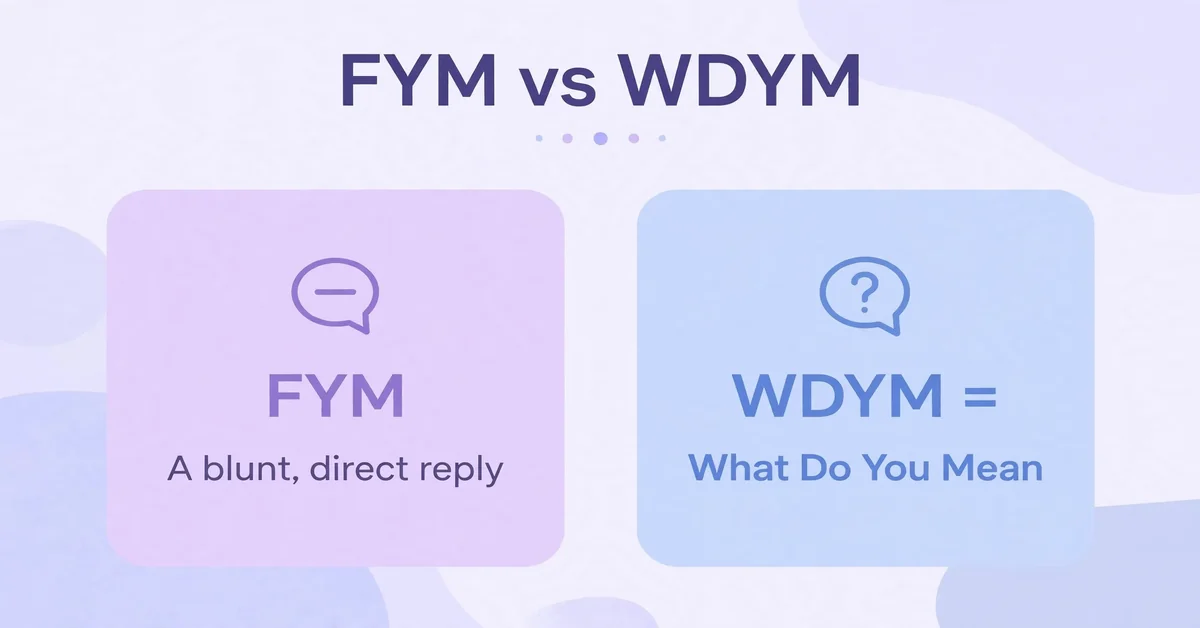
People mix FYM up with calmer ways of asking the same thing, but each carries a different weight. In short, FYM is the emotional version of WDYM.
| Term | Meaning | Tone | When to use it |
|---|---|---|---|
| FYM | What do you mean, with attitude | Sharp or playful | Surprise or banter with friends |
| WDYM | What do you mean | Neutral | Everyday confusion |
| WYM | What you mean | Casual | Quick check with friends |
| Huh? | I do not get it | Light and blunt | Fast reaction |
| Wait, what? | I am surprised or confused | Friendly | Surprise, no edge |
The main mix up is FYM versus WDYM. WDYM asks neutrally, while FYM adds pressure and emotion. Chat slang like WBY and HN works the same way: tiny words, very different jobs depending on tone.
Common FYM Variations
People stretch FYM by adding a small word or an emoji after it. Each version adds a seperate shade of tone, and FYM bro is one of the most common in friend groups.
- FYM? Plain disbelief, short and direct.
- fym Lowercase, often feels softer and more casual on screen.
- FYM bro Adds a friendly, dramatic tone between friends.
- FYM fr Adds seriousness, as if saying “for real, explain this.”
- FYM rn Limits the shock to right now.
- FYM tho Sounds slightly more questioning and a little less aggressive.
- WTFYM A stronger, more intense version of the same reaction.
The extra word tells you how the sender feels. “FYM lol” style replies are light, “FYM fr” is serious, and plain “FYM” is the version most likely to be misread.
How to Reply When Someone Sends FYM
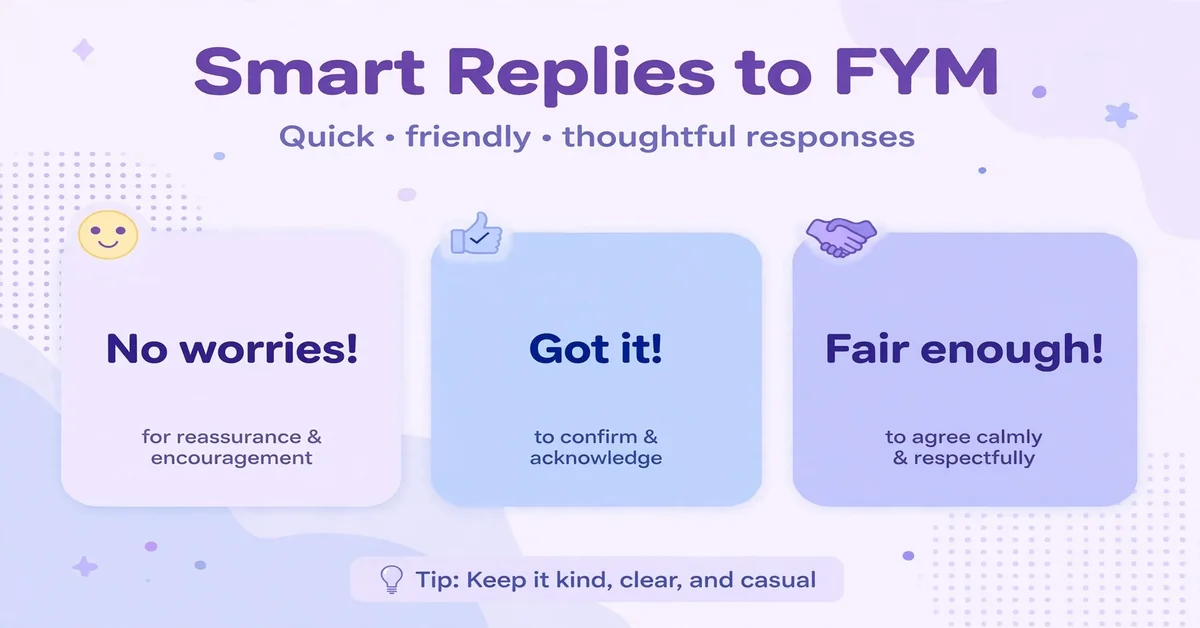
The best reply calms the moment without backing down. If they were joking, stay playful. If they were serious, stay clear.
Calm replies: “Let me explain properly”, “What I meant was this”, “I can see why that sounded odd.”
Playful replies: “You heard me”, “I said what I said”, “Relax, hear me out first.”
Respectful replies: “I did not word that well, sorry”, “Can we talk about this properly?”, “I get why you reacted like that.”
Do not fire back with a sharper reply. If the chat matters, explain once, clearly, and let the other person respond.
When Not to Use FYM
Skip FYM in professional or serious conversations. At work, in a school email, or with someone upset, it can sound rude even if you meant it lightly.
Also avoid it when someone shares something emotional. If a friend says they are going through a hard time, a blunt reply can feel cold. A full sentence shows you listened.
The same rule applies to people who may not know the slang. Older relatives, teachers, and clients may read it as anger rather than surprise. When in doubt, use “What do you mean by that?” instead.
FAQs
Is FYM rude?
Not always. It can be playful between close friends, but it can sound rude with strangers, at work, or in a tense conversation. Tone and relationship decide how it lands.
What is the difference between FYM and WDYM?
WDYM asks neutrally what someone means. FYM asks the same question with more emotion, pressure, or humor. WDYM is safe almost everywhere, FYM is not.
Can I use FYM at work?
Better not to. It reads as informal and possibly aggressive at work. Write “Could you clarify what you mean?” instead.
Does FYM always mean someone is angry?
No. It often means surprise, confusion, or playful disbelief, and emojis or follow up words usually show which version it is.
Is FYM still used today?
Yes, it is still common in texting, TikTok comments, Instagram DMs, and group chats, mostly among younger, frequent texters.
Final Thoughts
FYM is a tiny reply with a big tone problem: funny among friends, risky everywhere else. Once you know what it means, the only skill left is reading the room before you send it.
Use it with friends who get the joke, and it stays handy. Use it bare in the wrong moment, and it can sound harsher than planned. In the end, context decides what FYM really says.