
STSU usually means “shut the s*** up,” a slang phrase that can sound playful or rude depending on tone.
Four letters, two personalities. STSU can be a joke or a jab.
Tone decides everything here. Keep reading to learn both sides of STSU.
Quick Answer
In texting, the stsu meaning in text is usually “shut the s*** up,” a playful or rude way to tell someone to stop talking. Among friends it is often a joke; with strangers it can sound aggressive.
STSU at a Glance
The two faces of STSU, side by side.
| Meaning | Tone | Where It Appears |
|---|---|---|
| Shut the s*** up (playful) | Shocked disbelief, joking | Texts, TikTok, Snapchat, gaming |
| Shut the s*** up (serious) | Rude, aggressive | Arguments, heated chats |
Same letters, opposite energy. Always read the tone first.
Examples of STSU in Text
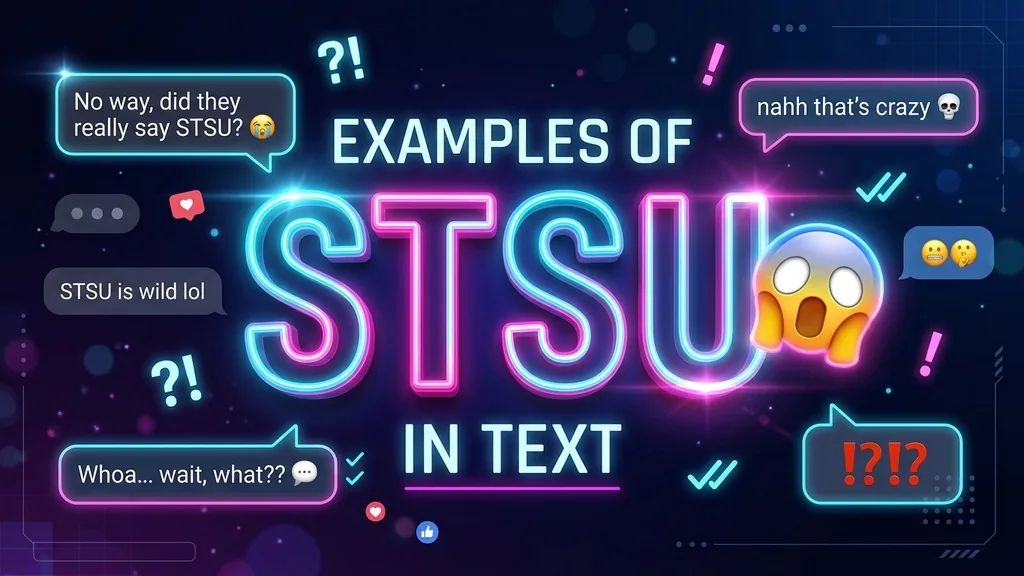
People often use STSU in short reactions. The meaning becomes clearer when you look at what came before it. Here are realistic examples of how it may appear in messages:
- Friend 1: “I just saw my teacher at the concert last night.”
Friend 2: “STSU 😂 What was he wearing?” - Friend 1: “I finished the whole project in twenty minutes.”
Friend 2: “STSU, you did not.” - Friend 1: “I think I might move to another country next month.”
Friend 2: “STSU. Are you actually serious?” - Person 1: “You never listen to anything I say.”
Person 2: “STSU.”
In the first three examples, STSU is likely playful. The laughing emoji, the surprising news, and the questioning language make the tone less serious.
The sender may be expressing disbelief or excitement. In the last example, the abbreviation appears during conflict, so it sounds much more hostile.
It may also appear as part of a longer sentence. Someone might write, “STSU, that cannot be real,” or “Bro, STSU right now.” These versions can still be joking, but the phrase remains blunt. A person who does not know the sender well may read it as disrespectful.
Spelling and punctuation can affect the feeling too. “STSU 😂” often sounds lighter than “STSU.” A message in all capital letters may feel more forceful, although many people use capitals simply because abbreviations are normally written that way. One short message cannot always reveal the sender’s real intention.
STSU on Social Media and Messaging Apps
STSU can appear anywhere people use fast, informal communication. On Instagram, users may post it in comments when a friend shares an unbelievable story, an unexpected photo, or a funny opinion. A comment such as “STSU 😂” may mean “I cannot believe you actually did that,” rather than a serious order to be quiet.
On Snapchat, the abbreviation may appear in a private snap or chat. Snapchat messages are often casual and quick, so friends may use strong slang without intending real harm. Still, the same message from a stranger can feel insulting because there is no shared relationship to soften the words.
TikTok comments may use STSU as a reaction to a surprising video or bold claim. Some people use it in a playful way when a creator says something dramatic.
Because public comments lack private context, other readers may interpret the phrase differently. One person may see a joke, while another may see bullying.
On Discord and Roblox-related chats, STSU may show up during gaming conversations. A player might use it after a friend claims credit for a lucky win.
In a busy game chat, users sometimes type abbreviations quickly and do not think about how harsh they sound. Moderators may still treat it as abusive language, especially if it is aimed at a particular player repeatedly.
On Reddit or other discussion sites, STSU can be more confrontational. A user may write it in response to an opinion they strongly dislike.
In that setting, it is less likely to be understood as friendly unless the surrounding conversation clearly shows humor. Platform culture matters, but direct wording and the relationship between users matter even more.
Why Context Changes the Meaning
Text messages do not include facial expressions, voice, or body language. Because of that, the same abbreviation can carry different meanings.
STSU from a close friend may be a playful reaction, while STSU from a stranger may be a genuine insult. The words before and after it provide important clues.
Look for signs of humor. Emojis such as a laughing face, crying-laughing face, or skull may show that the sender is joking.
A follow-up like “I’m kidding” or “That is hilarious” also makes the tone clearer. Friendly nicknames, casual spelling, and an ongoing pattern of teasing can suggest that the phrase is not meant literally.
On the other hand, STSU may be serious when it follows an argument, accusation, or personal attack. If the sender repeats it, adds threats, or targets you in a public group, the message has moved beyond harmless slang. You do not have to accept rude language simply because the person calls it a joke.
The best interpretation comes from combining several details:
- Your relationship with the sender.
- What you were discussing before the message.
- Whether the sender usually jokes in this way.
- Any emojis or follow-up messages.
- Whether the message appears private or public.
- How the message made you feel.
STSU From a Girl or a Guy
Searches often ask whether STSU has a different meaning when it comes from a girl or a guy. Usually, it does not.
The abbreviation generally carries the same basic meaning regardless of the sender’s gender. The more useful clues are the relationship, the topic, and the tone of the conversation.
A girl may send STSU to a close friend after hearing gossip or an unbelievable story. A guy may use it in the same playful way during a gaming chat or group conversation. These patterns are not rules, and it is risky to guess someone’s feelings based only on whether the sender is male or female.
Some people also wonder whether STSU proves that the sender is flirting. It does not.
Teasing can sometimes appear in a flirty conversation, but STSU alone is not enough evidence. Look for wider signs, such as consistent attention, personal questions, warm language, or clear romantic interest.
If the message feels confusing, you can ask directly without making the situation dramatic. A simple reply such as “Are you joking or are you actually annoyed?” gives the sender a chance to explain. This is often more accurate than trying to decode a single abbreviation through assumptions about gender.
Similar Terms and Abbreviations
STSU is easy to confuse with other short expressions. Some have similar letters but different meanings, while others express the same idea with a different level of rudeness. The exact definition may also vary across communities, so context remains important.
| Term | Meaning | Difference |
|---|---|---|
| STSU | Shut the shit up | Usually rude, though friends may use it playfully. |
| STFU | Shut the f*** up | A well-known and often harsher version of the same command. |
| STHU | Shut the hell up | Similar meaning, but it uses “hell” instead of the stronger swear word. |
| STS | Meaning varies by context | May refer to a phrase unrelated to telling someone to be quiet. |
| SWU | Often read as “so, what’s up?” | Usually starts a conversation and is not an insult. |
| LOL | Laughing out loud | Shows amusement without telling someone to stop talking. |
Typos can also create confusion. Someone may intend to type another abbreviation but press the wrong letters.
If STSU does not fit the rest of the conversation, ask what the sender meant instead of assuming the worst. A quick clarification can prevent a small misunderstanding from becoming an argument.
When STSU Sounds Playful
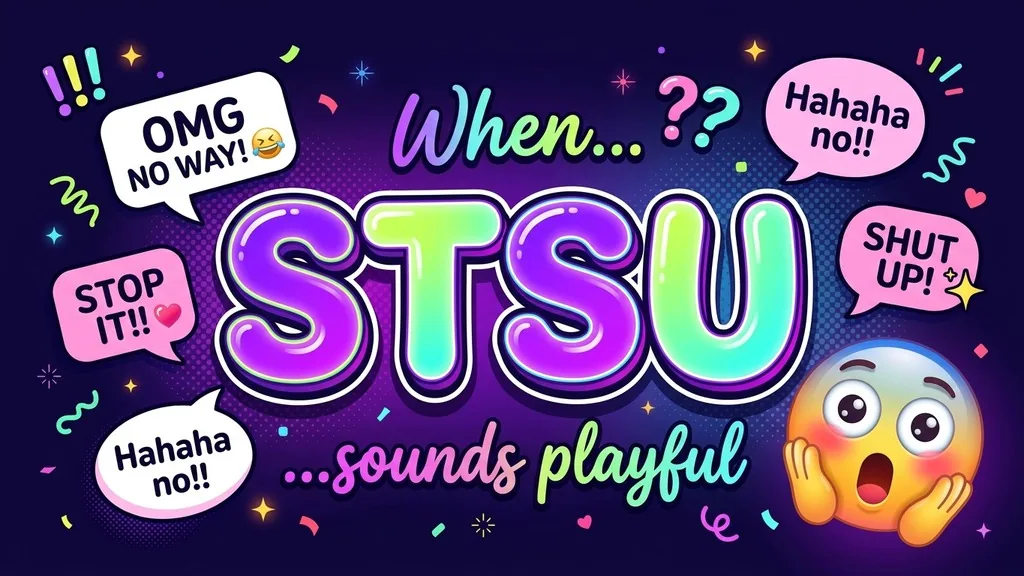
STSU is more likely to sound playful when close friends already tease each other. For example, one friend may announce an obviously dramatic plan, and another may answer, “STSU 😂.” In this case, the phrase works almost like “You are ridiculous” or “I cannot believe what I am hearing.” The humor comes from exaggeration.
Shared history matters. Friends who regularly joke with strong language may understand the phrase differently from people meeting for the first time.
The same words can feel safe within one group and hurtful outside it. A sender should not assume that everyone accepts this style of humor.
Emojis often soften the message, but they do not guarantee that it is harmless. A laughing emoji cannot erase the effect of an insult if the recipient feels attacked. Good communication requires attention to the other person’s reaction, not only the sender’s intention.
If someone replies with “Okay,” stops responding, or says the message was rude, it is better to apologize than to argue about the meaning. A simple message such as “Sorry, I meant that as a joke” can repair the conversation. Respect matters more than proving that STSU is common internet slang.
How Emojis Reveal the Real Meaning
Emojis are the tone markers of texting. They tell you which STSU you just got.
| Emoji | What It Signals |
|---|---|
| 😂 | Shocked and laughing |
| 😱 | Pure disbelief |
| 💀 | So funny or shocking it is unreal |
| 🤯 | Mind blown, completely shocked |
No emoji at all? Then yuo need to read the words around it very carefully.
When STSU Is Rude or Serious
STSU should be treated as rude when it is used to silence someone, embarrass them, or dismiss their opinion. This is especially true in a public group, during a disagreement, or when the sender has power over the recipient. A manager, teacher, or moderator using it toward someone could create a hostile environment.
Repeated use may also become harassment. One joke between friends is different from sending the same insult again and again after someone asks you to stop.
If the messages continue, save screenshots, use blocking tools, and report the account when appropriate. This is particularly important for younger users on social media and gaming platforms.
Do not feel pressured to answer with another insult. A calm response can set a clear boundary: “Please do not speak to me like that.” You can also leave the conversation if it is not productive. In a school, workplace, or moderated community, consider telling a trusted adult, supervisor, or moderator if the behavior continues.
The meaning of STSU may be informal, but its impact can still be serious. Slang is not automatically harmless simply because it is short or popular online.
How to Reply
Your best response depends on whether the sender is joking, angry, or unclear. If the message comes from a close friend and clearly sounds playful, you can answer with humor. For example, “You first 😂,” “No chance,” or “I’m only telling the truth” may keep the conversation light.
If you are unsure about the tone, ask for clarification. Try:
- “Are you joking?”
- “What do you mean by STSU?”
- “Did I upset you?”
- “That sounded a little harsh. Are we okay?”
If the sender is being rude, use a firm but calm answer. “Please keep it respectful” or “I will continue this conversation when you can speak calmly” sets a boundary without adding more conflict. You do not need to explain yourself at length.
Sometimes no reply is the best reply. If the sender is a stranger, a troll, or someone who keeps provoking you, ignoring, muting, blocking, or reporting them may work better than continuing the exchange. In a professional setting, avoid copying the abbreviation and use clear language instead.
STSU in Gaming and Online Communities
Gaming chats often create their own fast-moving slang. Players may use STSU after a teammate makes a bold claim, celebrates a lucky move, or blames another player.
Within a friendly team, it can be light teasing. In a competitive match, however, it may quickly turn into toxic chat.
Roblox, Discord, and other gaming spaces often include young users, so strong language can cause problems even when someone intends it as a joke. Many communities have rules against insults, harassment, and repeated abusive messages. A player may receive a warning or lose chat privileges if they target others.
Good gaming communication focuses on the play rather than attacking a person. Instead of writing STSU, someone could say, “That was a lucky win,” “Are you serious?” or “Let’s check the replay.” These alternatives still express surprise without using a swear word.
If another player directs STSU at you, you can mute the chat and continue playing. Do not share private information or respond with threats. Use the platform’s reporting system if the conduct becomes repeated, personal, or threatening.
Safer Alternatives to STSU
There are many ways to express surprise or disbelief without sounding rude. The best choice depends on what you want to communicate. “No way!” works well when someone shares unexpected news. “You are kidding!” shows disbelief while keeping a friendly tone.
Other options include “That is wild,” “Seriously?” “I cannot believe you,” and “Stop, that is too funny.” With friends, “Be quiet, I am laughing” may carry a teasing feeling without using a strong swear word. In a work or school message, choose direct and respectful wording such as “Could we stay on topic?” or “I disagree with that point.”
Replacing STSU is especially useful when speaking to someone you do not know well. Written messages can be saved, shared, and misunderstood by people who do not know your sense of humor. A few extra words can make your meaning much clearer.
Using safer language does not mean that every conversation must sound formal. It simply gives you more control over tone. You can be funny, surprised, or firm without making the other person feel attacked.
STSU vs STFU: What Is the Difference?
STSU is the version you send when you are laughing and cannot believe what you are hearing. STFU carries more edge.
| Abbreviation | Full Form | Tone |
|---|---|---|
| STSU | Shut the s*** up | Playful or mildly rude |
| STFU | Shut the f*** up | Stronger, more aggressive |
If someone might recieve it the wrong way, use neither. Pick a safer alternative from the section above.
FAQs
Is STSU a bad word?
Yes, it normally includes a swear word and can sound rude. Close friends may use it playfully, but it is not suitable for every audience.
What does STSU mean from a girl?
It usually has the same meaning from a girl as from anyone else: “shut the shit up.” The tone depends on the conversation and relationship.
What does STSU mean from a guy?
It generally means the same thing from a guy. It may be a joke, a reaction to surprising news, or a serious request for someone to stop talking.
Is STSU the same as STFU?
They have a similar purpose, but STSU uses a different swear word. Both can be playful among friends or offensive in a serious conversation.
Should I reply to STSU?
Reply if you want to clarify the tone or continue the conversation. If it feels abusive or comes from a stranger, ignoring, muting, blocking, or reporting may be better.
Conclusion
STSU most often means “shut the shit up.” It can express real anger, but friends may also use it as a playful reaction to surprising or funny news.
Context is the key to understanding the message. Consider the sender, the conversation, emojis, and whether the wording feels friendly or hostile before deciding how to respond.
If you want to avoid confusion, choose a clearer and less offensive phrase. Respectful language usually keeps online conversations safer, especially in public groups, gaming chats, school spaces, and workplaces.