
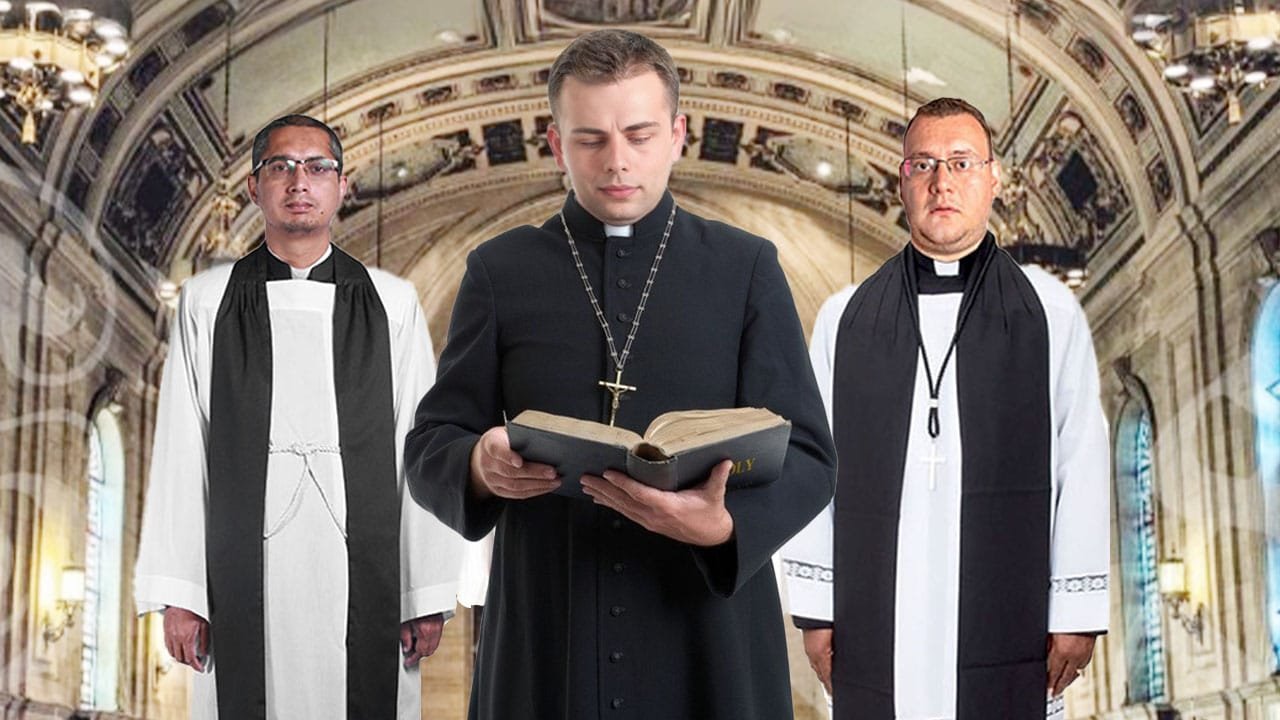
Roman Catholic priest garments are an important part of the Catholic Church’s religious traditions. These garments are more than ordinary clothing because they represent faith, spiritual responsibility, religious identity, and the sacred duties performed by priests. From the traditional black clerical shirt to the beautiful vestments worn during Mass, each garment has a specific purpose and meaning.
For centuries, the Catholic Church has maintained distinctive clothing traditions for its clergy. Although some garments have changed in appearance over time, their religious significance remains deeply connected to Catholic beliefs and practices. Understanding these garments provides valuable insight into the history, symbolism, and structure of the Catholic Church.
Whether someone is researching Catholic traditions, studying religious history, or simply curious about what priests wear, learning about Roman Catholic priest garments offers an interesting look into one of Christianity’s oldest traditions.
What Are Roman Catholic Priest Garments?
Roman Catholic priest garments are specialized clothing worn by Catholic priests during religious services, official church activities, and everyday ministry. These garments help distinguish priests from other members of the congregation and communicate their religious role.
Some garments are worn daily, while others are reserved for specific ceremonies, including Holy Mass, weddings, funerals, baptisms, and other sacraments.
Catholic priest clothing generally falls into two main categories: clerical attire and liturgical vestments.
Clerical attire refers to clothing worn during everyday activities and pastoral responsibilities. It commonly includes a black clerical shirt, Roman collar, and sometimes a cassock.
Liturgical vestments are special garments worn during worship and religious ceremonies. These include the alb, stole, chasuble, and other traditional items.
Each piece contributes to the visual identity of Catholic worship and reflects the Church’s emphasis on reverence, tradition, and spiritual service.
The History of Catholic Priest Clothing
The history of Catholic priest clothing developed gradually over many centuries. In the earliest Christian communities, religious leaders generally wore clothing similar to that of other people in their societies.
As Christianity expanded throughout Europe and other regions, the Church gradually established distinctive clothing traditions for clergy.
During the early centuries, priests and bishops often wore garments influenced by the ordinary clothing of the Roman world. Over time, everyday fashion changed, but religious garments preserved older styles.
This development helped create recognizable liturgical clothing that distinguished church ceremonies from ordinary activities.
By the Middle Ages, Catholic vestments had developed into more standardized forms. Different garments became associated with particular religious responsibilities and ceremonies.
Colors also gained greater symbolic importance. White, red, green, violet, and other liturgical colors became connected with particular seasons and celebrations.
Today, Roman Catholic priest garments continue to reflect this historical development. Although modern materials and tailoring techniques have influenced their appearance, many traditional designs remain recognizable.
Common Types of Roman Catholic Priest Garments
Catholic priests wear several different garments depending on the occasion. Each item has a particular function and religious meaning.
1. The Cassock
<escape>The cassock</escape> is one of the most recognizable traditional garments worn by Catholic clergy. It is a long, close-fitting robe that usually extends from the neck to the ankles.
The traditional priest’s cassock is black, although other colors are used for different ranks and circumstances. For example, bishops commonly wear purple cassocks, while cardinals traditionally wear red.
The cassock represents the priest’s commitment to religious service and his connection to the Catholic Church.
It may be worn during daily church activities, prayer, official gatherings, and certain religious ceremonies. In some places, priests wear it regularly, while others prefer modern clerical clothing.
2. The Roman Collar
The Roman collar is a distinctive part of Catholic clerical clothing. It is a narrow white collar worn with a black clerical shirt or cassock.
The collar is often associated with the public identity of Catholic priests. It makes clergy recognizable and symbolizes their dedication to religious ministry.
Although the Roman collar appears simple, it has become one of the most familiar symbols of Catholic priesthood.
Modern clerical shirts may feature either a full collar or a tab-style collar, depending on regional preferences and personal choices.
3. The Alb
The alb is a long white garment worn by priests during Mass and other liturgical celebrations.
Its name comes from the Latin word albus, meaning white. The color traditionally represents purity, new life, and the spiritual cleanliness associated with Christian baptism.
The alb generally extends to the ankles and is worn over ordinary clothing or other appropriate garments.
Many albs are made from lightweight fabric and feature simple designs. Some include decorative details around the sleeves or neckline.
Priests commonly wear an alb beneath the stole and chasuble during the celebration of Mass.
4. The Stole
The stole is a long, narrow strip of fabric worn around the neck by priests during liturgical celebrations.
It is one of the most important symbols of ordained ministry in the Catholic Church.
A priest usually wears the stole over both shoulders, allowing its ends to hang down in front. Deacons wear it differently, placing it diagonally across the body.
Stoles come in different liturgical colors, including white, red, green, and violet.
The stole represents the responsibilities and authority associated with ordained ministry. It is worn during Mass, confessions, baptisms, weddings, and other sacramental celebrations, according to the appropriate liturgical requirements.
5. The Chasuble
The chasuble is the outer vestment worn by a priest during the celebration of Mass.
It is usually a large, flowing garment that covers the alb and stole. Its design may be simple or decorated with religious symbols, embroidery, and traditional patterns.
The chasuble is especially important because it is the principal vestment worn by the priest during the Eucharistic celebration.
Its color changes according to the liturgical season or particular feast being celebrated.
The garment represents charity and the spiritual responsibility of serving the Church.
6. The Surplice
A surplice is a white garment traditionally worn over a cassock during certain religious services.
It usually has wide sleeves and a relatively loose shape. Compared with an alb, a surplice is generally shorter and is not ordinarily used as the principal vestment for celebrating Mass.
Surplices may be worn by priests, deacons, altar servers, and other authorized ministers during different liturgical activities.
They are particularly associated with traditional church ceremonies and processions.
7. The Cincture
The cincture is a cord or fabric belt worn around the waist to secure the alb.
It is usually white, although different designs and colors may be used according to local traditions and approved liturgical practices.
Beyond its practical function, the cincture symbolizes discipline, readiness, and spiritual commitment.
Some cinctures feature decorative tassels at their ends, while others have a simple appearance.
Understanding Liturgical Colors
One of the most interesting aspects of Roman Catholic priest garments is the use of different colors.
Liturgical colors help communicate the spiritual character of different celebrations throughout the Church calendar.
White
White represents joy, purity, glory, and celebration.
It is commonly used during Christmas, Easter, celebrations of the Lord, Marian feasts, and certain celebrations of saints who were not martyrs.
Red
Red symbolizes the Holy Spirit, sacrifice, courage, and martyrdom.
It is commonly worn on Palm Sunday, Good Friday, Pentecost, and celebrations honoring martyrs.
Green
Green represents hope, growth, and spiritual life.
It is primarily used during Ordinary Time, which covers the periods of the liturgical year outside the major seasons of Advent, Christmas, Lent, and Easter.
Violet
Violet is associated with reflection, repentance, preparation, and spiritual renewal.
It is commonly used during Advent and Lent. It may also be used in certain celebrations for the dead.
Rose
Rose is an optional liturgical color used on two special Sundays: Gaudete Sunday during Advent and Laetare Sunday during Lent.
It represents a sense of joy and encouragement during seasons of preparation and penance.
These colors help make Catholic worship visually meaningful while connecting individual celebrations with the broader liturgical calendar.
Garments Worn During the Celebration of Mass
The celebration of Holy Mass is one of the most important responsibilities of a Catholic priest. For this reason, specific garments are worn according to established liturgical traditions.
Before Mass, the priest generally prepares by putting on the appropriate vestments.
The alb is usually the first major liturgical garment worn. It provides the basic white layer for the celebration.
The cincture may then be used to secure the alb around the waist.
Next, the priest places the stole around his neck, allowing both ends to hang down in front.
Finally, the chasuble is worn over the other vestments.
This combination creates the traditional appearance associated with Catholic priests celebrating Mass.
The preparation process also offers an opportunity for prayer and spiritual reflection. In many traditions, priests use prayers associated with vestments as they prepare for their liturgical duties.
Special Garments Worn by Bishops and Other Clergy
Although priests share many clothing traditions, different ranks within the Catholic Church have additional garments and accessories.
Bishops, for example, may wear special items that identify their office and responsibilities.
The mitre is a distinctive ceremonial headpiece worn by bishops during certain liturgical celebrations.
The crozier is a pastoral staff carried by bishops as a symbol of their responsibility to guide and care for the faithful.
The pectoral cross is another important item. It is a cross worn around the neck, commonly on a cord or chain.
Cardinals and bishops also have distinctive colors associated with their traditional clerical attire.
These differences help communicate the structure of the Catholic Church while maintaining a shared tradition of religious clothing.
Materials Used to Make Catholic Priest Garments
The materials used in Roman Catholic priest garments vary depending on the garment’s purpose, design, and price.
Traditional vestments were often produced using natural materials such as linen, wool, cotton, and silk.
Today, manufacturers also use modern synthetic fabrics and fabric blends.
Cotton is popular for its comfort and breathability. Linen is valued for its lightweight feel and traditional appearance.
Silk and decorative brocade fabrics are sometimes used for more elaborate vestments, especially those designed for important celebrations.
Modern polyester blends are also common because they can be durable, relatively affordable, and easier to maintain.
Embroidery is another important feature of some priest garments. Religious symbols such as crosses, wheat, grapes, and images of saints may appear on vestments.
The choice of material depends on comfort, climate, durability, and the style of the garment.
Why Are Roman Catholic Priest Garments Important?
Roman Catholic priest garments have several important purposes within the Church.
First, they create a recognizable identity for clergy. A priest wearing a Roman collar or traditional vestments can be easily distinguished from other members of the congregation.
Second, these garments express religious symbolism. Their colors, shapes, and decorations communicate ideas connected with faith, sacrifice, purity, service, and celebration.
Third, vestments help create a sense of reverence during religious ceremonies. Their traditional appearance reminds worshippers that the liturgy is a sacred activity rather than an ordinary gathering.
Fourth, priest garments preserve the historical traditions of the Catholic Church. Many designs have remained recognizable across generations, connecting modern worshippers with centuries of Christian history.
Finally, these garments emphasize that the priest performs his liturgical duties in an official religious capacity.
Modern Changes in Catholic Priest Clothing
Although traditional vestments remain important, modern Catholic priest clothing has experienced several changes.
Today, many priests wear simple clerical shirts instead of traditional cassocks during everyday activities.
Lightweight fabrics and practical designs have also become more popular, especially in warmer climates.
Some modern vestments feature minimalist designs, while others preserve traditional embroidery and decorative patterns.
Churches may choose vestments according to local customs, available resources, and the requirements of the liturgical calendar.
Despite these developments, the essential purpose of Catholic priest garments remains unchanged.
The clothing continues to represent religious identity, spiritual responsibility, and the traditions of Catholic worship.
How to Choose Quality Catholic Priest Garments
Choosing suitable priest garments requires attention to several important factors.
Fabric quality: Comfortable and breathable materials are particularly important for priests who spend long periods celebrating Mass or participating in religious activities.
Proper fit: Vestments should allow natural movement without being excessively tight or uncomfortable.
Correct liturgical color: The garment should match the requirements of the relevant celebration and liturgical season.
Craftsmanship: Strong stitching, quality finishing, and durable materials help garments maintain their appearance over time.
Design and tradition: Some churches prefer simple vestments, while others select more elaborate designs featuring religious embroidery.
Maintenance: Easy-care fabrics can be useful for clergy who wear their garments frequently.
Selecting appropriate clothing ensures that priests can perform their religious responsibilities comfortably while respecting Catholic traditions.
Conclusion
Roman Catholic priest garments are much more than traditional religious clothing. They represent centuries of Christian history, spiritual dedication, and the sacred responsibilities of Catholic clergy.
From the cassock and Roman collar to the alb, stole, and chasuble, every garment has a particular purpose and symbolic meaning. Liturgical colors further enrich these traditions by connecting priestly clothing with important celebrations throughout the Church year.
Although modern materials and styles have influenced clerical clothing, traditional garments remain an essential part of Catholic religious life.
Understanding Roman Catholic priest garments provides a deeper appreciation of Catholic worship, the history of the Church, and the symbolic details that make its religious ceremonies distinctive. Whether worn during everyday ministry or solemn liturgical celebrations, these garments continue to express faith, service, reverence, and devotion.