
IDTS means I don’t think so. It is a short slang reply people use in chats when they doubt something, disagree in a soft way, or want to say no without sounding harsh.
You have probably seen it in a reply that felt colder than you expected, and you were left wondering whether the person was annoyed or just being brief.
Below, you will find the full form, real chat examples, the tone hiding behind those four letters, and smart replies you can send back when someone drops IDTS on you.
Quick Answer
The idts meaning in chat is simple: IDTS stands for I don’t think so. People use it as a short, casual way to show doubt or polite disagreement in texting and social media replies, usually when they do not want to write a long explanation or sound too direct.
What Does IDTS Mean in Chat?
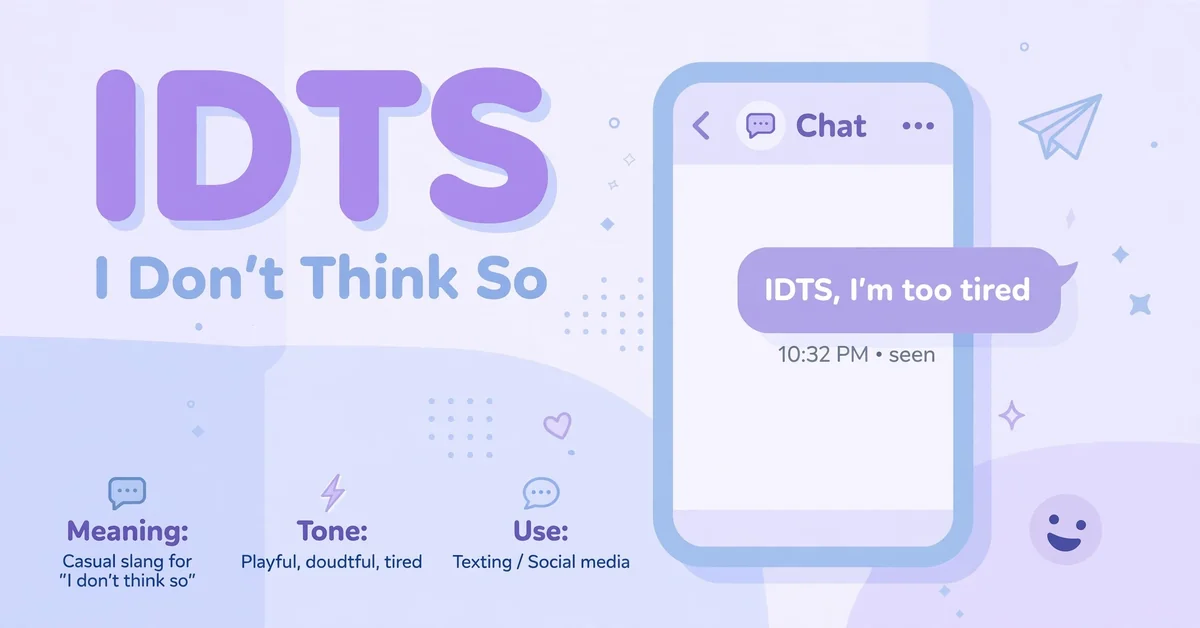
IDTS is a four letter shortcut for a full sentence. People send it when they feel doubt or a soft no, but they do not want to type out a long answer.
Here is the letter by letter breakdown:
- I = I
- D = Don’t
- T = Think
- S = So
Put together, it reads as “I don’t think so.” Like ISTG, it packs a whole feeling into a few letters, which is why it fits so well in fast chats.
Where Did IDTS Come From?
IDTS grew up in the early SMS days. Texting once had tight character limits, so people shortened full sentences into quick replies they could send and recieve in seconds.
From phones, it moved to WhatsApp, Messenger, Instagram comments, TikTok replies, and gaming chats. It survived because it is practical: one tiny word does the job of a full sentence.
Other short forms from the same era, like GNG, followed the same path from SMS screens to every social app.
IDTS in Real Chats
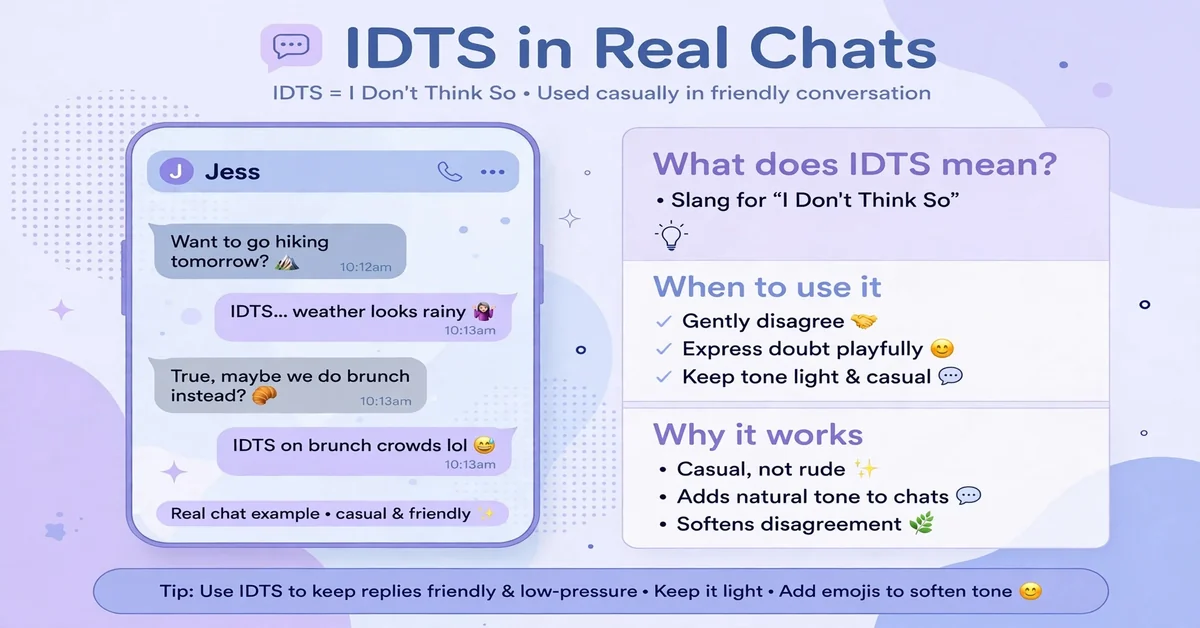
Reading examples is the fastest way to get IDTS, because tone changes everything with this word. Here are three chats you might actually see:
Movie plan: “Are we watching the new film tonight?” Reply: “IDTS, I have an early morning.”
Weekend trip: “Do you think we can leave on Friday?” Reply: “IDTS, the tickets are already sold out.”
New phone: “Is this the best phone to buy right now?” Reply: “IDTS, wait for the next launch.”
Notice how each reply is short, honest, and not rude. The same word in a serious talk would land very differently, which brings us to the feeling behind it.
What IDTS Really Signals
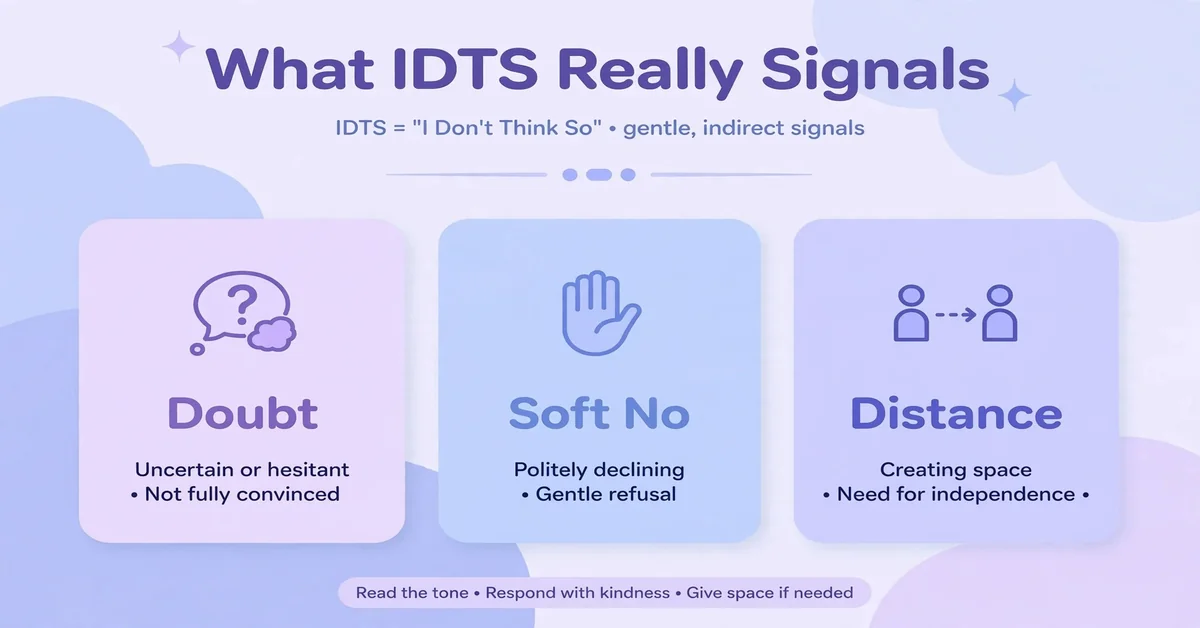
Behind the four letters, IDTS usually signals one of three things. The most common one is a soft rejection, a no that tries not to hurt.
First, it can mean plain doubt. The person is not sure, so they hold back instead of agreeing. Second, it can mean disagreement kept casual, so the chat stays friendly.
Third, it can mean distance. When someone answers with only IDTS and nothing else, they may be keeping the talk short on purpose. Adding an emoji or a short reason removes that cold feeling fast.
IDTS vs IDK and Other Short Replies
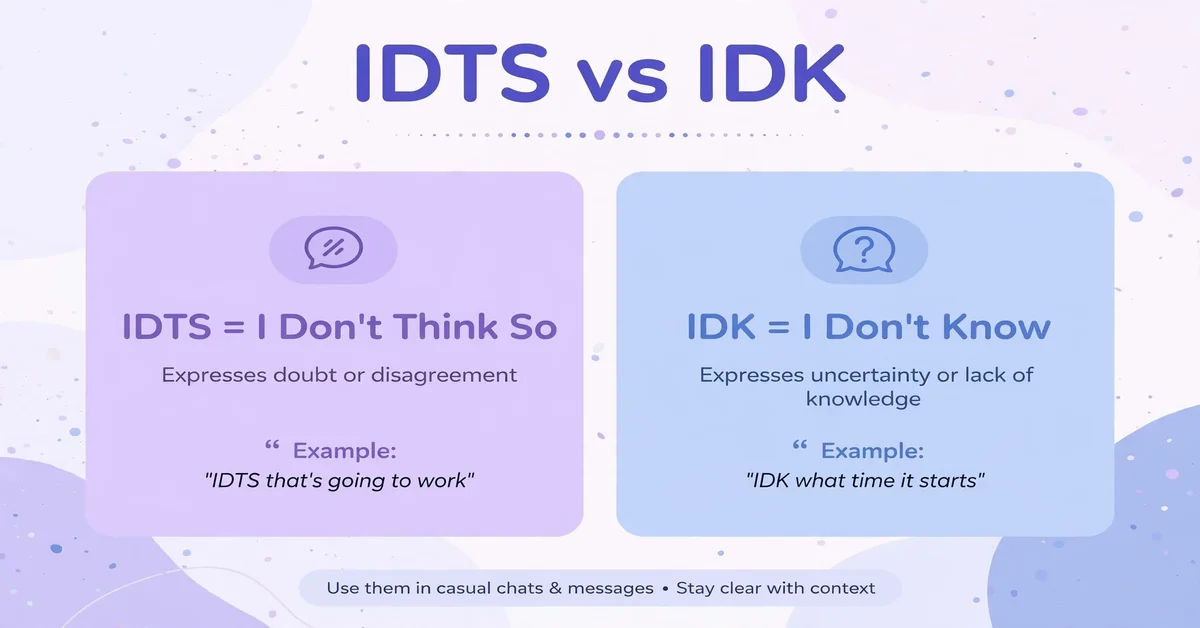
People mix IDTS up with similar replies, but each one does a different job. In short, IDTS sits between a maybe and a no.
| Term | Meaning | Tone | When to use it |
|---|---|---|---|
| IDTS | I don’t think so | Neutral to blunt | Doubt or soft disagreement |
| IDK | I don’t know | Neutral | You truly lack the answer |
| IMO | In my opinion | Polite | Sharing a personal view |
| Nah | No | Direct | Casual refusal among friends |
| Maybe not | Probably no | Gentle | Polite refusal with warmth |
The big mix up is IDTS versus IDK. IDK means you do not know the answer. IDTS means you have an opinion, and it leans toward no. Chat slang like HN and WBY work the same way: tiny words, very different jobs.
Common IDTS Variations
People stretch IDTS by adding one small word after it. Each version adds a seperate shade of tone, and IDTS tbh is the one you will see most often.
- IDT: a shorter cut, means “I don’t think.”
- IDTS tbh: adds honesty, means “I don’t think so, to be honest.”
- IDTS lol: softens the reply with humor.
- IDTS rn: limits it to right now.
- IDTS bro: keeps it friendly and casual.
- IDTS sorry: turns it into a polite refusal.
As a rule, the extra word tells you how the sender feels. “IDTS lol” is light. “IDTS sorry” is careful. Plain “IDTS” with no extra word is the bluntest of the group.
How to Reply When Someone Sends IDTS
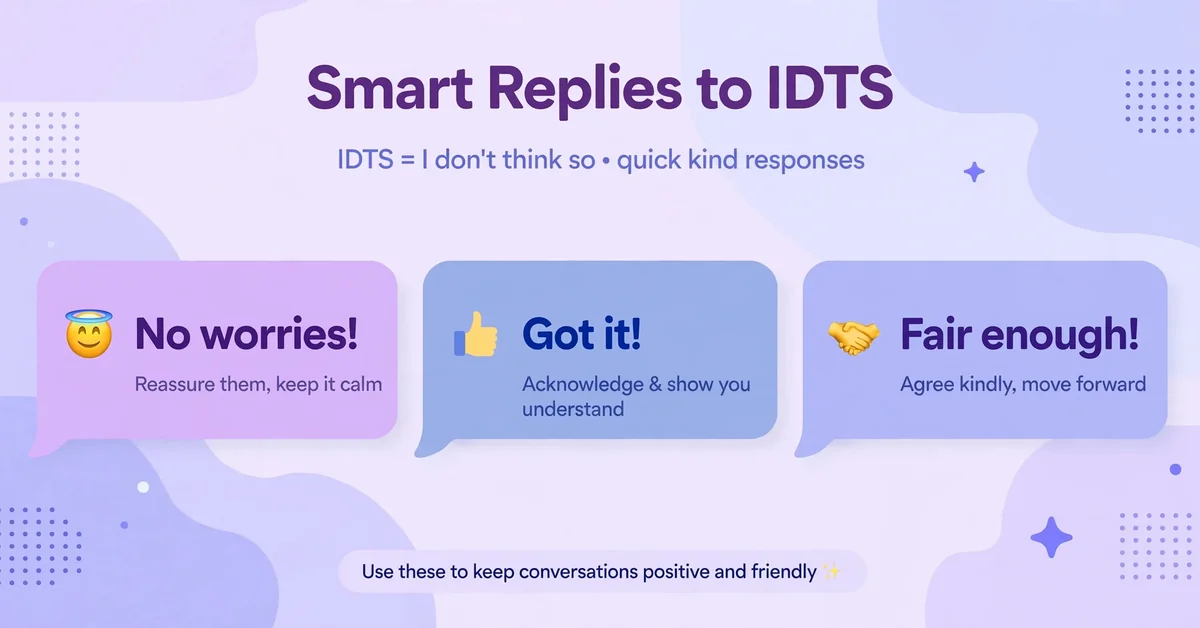
The best reply is one that matches their tone. If they were casual, stay casual. If they were careful, stay respectful.
Casual replies: “All good!”, “Got it!”, “Okay, next time then.”
Funny replies: “Haha, fair enough”, “That was fast”, “Confidence level noted.”
Respectful replies: “No stress at all”, “Respect, thanks for saying it straight”, “We can plan something else.”
Do not argue with an IDTS in the same message. If the plan matters, ask one calm follow up question later instead of pushing back right away.
When Not to Use IDTS
Skip IDTS in serious conversations. When someone shares feelings, talks about a problem, or needs support, a four letter reply can feel dismissive even if you did not mean it that way.
Also avoid it at work. In a job chat, write the full thought instead, like “I don’t think that plan will work, here is why.” Short slang like SN belongs in casual chats, not in professional ones, and IDTS follows the same rule.
FAQs
Is IDTS rude?
No, not by itself. It turns rude only when the moment needs warmth and you give a bare reply instead. Add an emoji or a short reason and it stays friendly.
What is the difference between IDTS and IDK?
IDTS means “I don’t think so” and shows an opinion leaning toward no. IDK means “I don’t know” and shows you lack the answer. They are not interchangeable.
Can I use IDTS at work?
Better not to. It reads as informal in a professional chat. Write the full sentence so your point lands clearly.
What does IDTS tbh mean?
It means “I don’t think so, to be honest.” The “tbh” adds honesty and makes the reply feel more open than plain IDTS.
Is IDTS still used today?
Yes, it is still common in texting, social media comments, and gaming chats, mostly among younger users and frequent texters.
Final Thoughts
IDTS is a tiny word with a big tone problem: useful among friends, risky in serious moments. Once you know it means “I don’t think so,” the only skill left is reading the room before you send it.
Use it with a little warmth, a reason, or an emoji, and it stays a handy shortcut. Use it bare in the wrong moment, and it can sound colder than you planned. In the end, context decides what IDTS really says.