
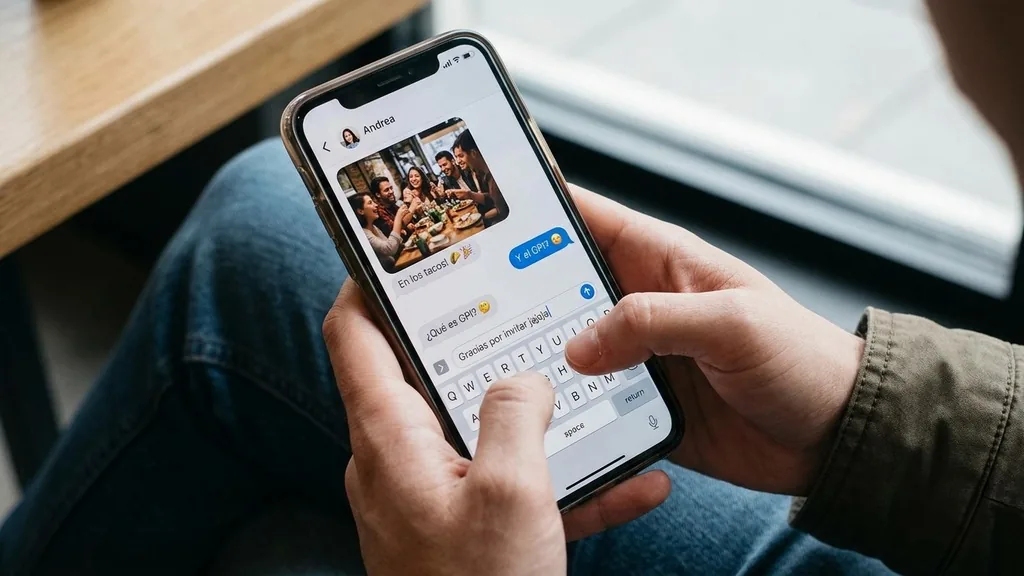
GPI means “gracias por invitar,” Spanish for “thanks for inviting,” usually said with heavy sarcasm.
It pops up under party photos and group-chat plans, always from the person who was not invited.
The joke is simple, but the tone can be tricky to read. The full guide below covers every angle.
- What GPI means in Spanish and English-language chats
- Real examples for texts, comments, and group conversations
- How tone changes the meaning of GPI
- Related abbreviations and possible meanings in other fields
What Does GPI Mean in Text & Chat?
In texting and online slang, GPI most often means “gracias por invitar,” which translates to “thanks for inviting.” The phrase is usually ironic: someone writes GPI after seeing friends make plans without including them.
It can sound playful, mildly hurt, or openly sarcastic depending on the relationship.
A close friend may use it as a joke, while someone who genuinely feels excluded may use it to call attention to the omission.
Unlike TY, which normally means “thank you,” GPI often communicates the opposite of literal gratitude.
- Playful use: A friend posts a photo from dinner, and someone comments “GPI 😂.”
- Sarcastic use: A person notices that coworkers planned an outing without them.
- Teasing use: Someone jokingly complains after learning that friends met up.
Quick Answer
The gpi meaning in text is “gracias por invitar,” Spanish for “thanks for inviting.” It is usually sarcastic, sent when someone was left out of plans.
Full Form, Stands For & Short Meaning of GPI
The commonly understood slang expansion of GPI is “gracias por invitar.” In Spanish, this literally means “thanks for inviting,” although the person using it often was not invited at all.
That contrast creates the expression’s sarcastic effect.
GPI does not have one universal full form in every language or industry.
In texting, however, the Spanish expression is the meaning most relevant when it appears next to a party photo, travel plan, restaurant visit, or group-chat discussion.
| Abbreviation | Meaning |
|---|---|
| GPI | Gracias por invitar, “thanks for inviting,” commonly used sarcastically |
Short Meaning: “Thanks for inviting,” usually said when someone was left out of a plan.
Because slang can cross language boundaries, English-speaking users may copy GPI from Spanish-language social media without speaking Spanish fluently.
In that case, they usually use it as a recognizable joke about being excluded rather than as a formal Spanish sentence.
Origin, History & First Known Use of GPI
There is no reliably documented single creator, launch date, or first message associated with GPI as slang.
It appears to come from the natural shortening of a common Spanish phrase in digital communication, where people reduce longer expressions to a few easy-to-type letters.
The abbreviation fits a broader pattern in Spanish texting and social media: familiar phrases become initials, especially when the shortened form is easy for friends to understand.
GPI can also be used as a meme-like comment, where its humor comes from the mismatch between the polite words and the complaint underneath.
Its meaning is easiest to recognize in settings where people share evidence of an activity.
A picture from a restaurant, a story from a concert, or a message about a weekend trip can all prompt a sarcastic “GPI.”
- Private text messages between friends
- WhatsApp group chats
- Instagram comments and Stories
- TikTok comments and captions
- Snapchat messages and group snaps
- Spanish-language online communities and meme pages
The expression is part of informal internet language, not a formal Spanish abbreviation that belongs in business letters, school assignments, or professional communication.
How People Use GPI in Daily Conversations
Texting Examples
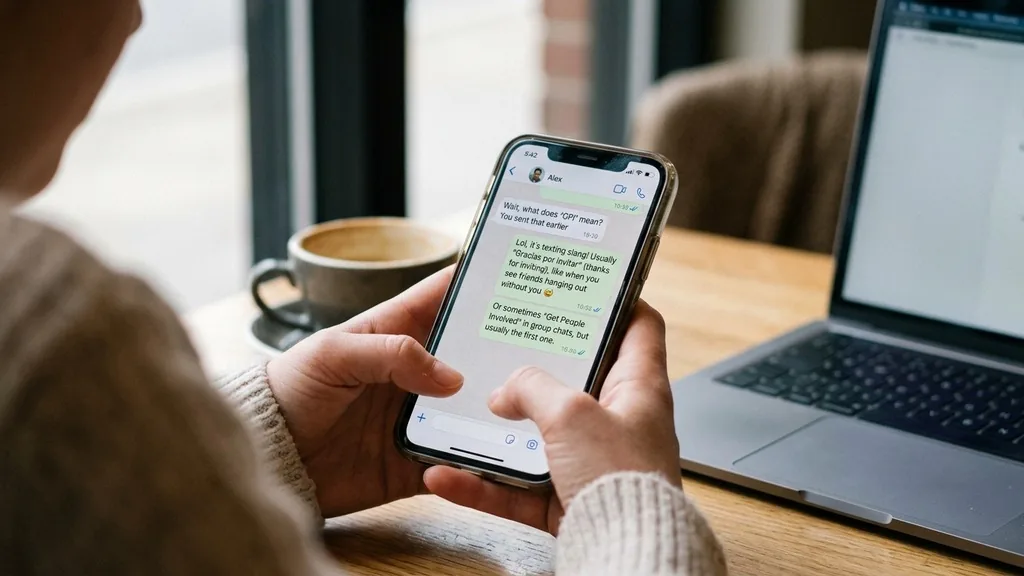
In a text conversation, GPI usually reacts to information that reveals an invitation was missing. The message may follow a photo, a group update, or a friend’s casual mention of plans.
Emojis help show whether the sender is joking or feeling slightly offended.
- “Wait, you guys went bowling last night? GPI 😭”
- “I saw the beach pictures. GPI, besties.”
- “Next time you plan brunch, maybe remember me? GPI 😂”
- “You made a whole movie night group chat without me. GPI.”
- “Have fun at the concert! GPI, I guess 😅”
Social Media Usage
On social media, GPI is often posted as a short comment under a friend’s photo or video.
The commenter may not expect a serious explanation; the phrase can simply announce, in a funny way, that they noticed the event and were not included.
- Comments: “GPI 😂” under a group dinner photo.
- Replies: A friend responds with GPI after seeing a weekend-trip announcement.
- Captions: Someone may jokingly write GPI on a repost showing friends hanging out.
- Stories: A viewer can send GPI as a quick reaction to an event post.
Because public comments lack vocal tone, emojis and the relationship between the people matter. A laughing emoji usually softens the complaint, while a plain “GPI” may feel more pointed.
Casual Situations
GPI works best when the sender already has a friendly connection with the people involved. It can be used for plans, jokes, opinions, and ordinary moments where someone feels overlooked.
- “You ordered pizza and didn’t ask what I wanted? GPI.”
- “Everyone knew about the game night except me. GPI, team.”
- “You two went shopping together? GPI 🛍️”
- “I’m happy for you, but also… GPI for the celebration.”
If the situation is sensitive, the phrase may not be enough to explain the real issue. Someone who feels seriously excluded may use GPI as an indirect way to start that conversation.
GPI Meaning Across WhatsApp, Instagram, TikTok & Snapchat
GPI on WhatsApp
On WhatsApp, GPI commonly appears in private messages and group chats. It may be sent after someone shares a photo, location, event detail, or update about plans.
Since WhatsApp conversations can be more personal, the abbreviation may be either affectionate teasing or a genuine complaint.
- It can be directed at one friend or an entire group.
- An emoji often signals that the message is not meant to start an argument.
- In a busy group, GPI may be a quick way to ask what happened without writing a long message.
- “So this is where everyone is tonight? GPI 😂”
GPI on Instagram
Instagram gives GPI a strong visual context. People often comment it under a carousel, Story, Reel, or tagged photo showing friends at an event.
The image provides the explanation, so the commenter only needs the three-letter abbreviation.
- It may appear under restaurant, travel, birthday, or concert photos.
- Tags can make the playful complaint more personal.
- A laughing or crying emoji usually makes the comment sound less serious.
- “The whole squad at dinner and no invite? GPI 😭”
GPI on TikTok
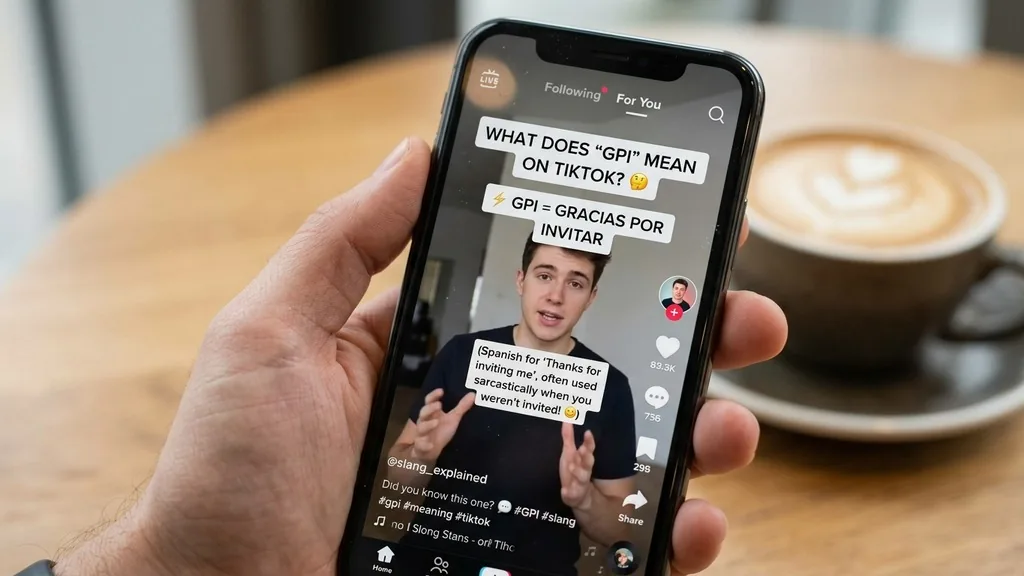
On TikTok, GPI can function as a reaction to a video showing a group activity.
It may appear in the comments when viewers recognize the people in the video or jokingly act as though they should have been included.
The term can also be used in Spanish-language content where the phrase is immediately understood.
- It can be a short reaction beneath a party or travel video.
- Commenters may use it humorously even when they do not know the creators personally.
- The surrounding video determines whether the comment sounds playful or genuinely disappointed.
- “Not the entire friend group going on a road trip without me. GPI 😂”
GPI on Snapchat
On Snapchat, GPI is likely to appear in a direct reply to a Snap or in a group conversation.
Since Snaps often show what someone is doing at that moment, a viewer may send GPI immediately after seeing friends together.
- It can respond to a live-looking photo from dinner, a game, or a party.
- Short messages and emojis fit Snapchat’s quick conversational style.
- The sender may follow up with “Where was my invite?” if they want a real answer.
- “You’re at the arcade? GPI 😭 save me a game.”
The core meaning stays the same across these platforms. What changes is the context: WhatsApp tends to support direct group conversation, Instagram highlights public comments, TikTok encourages broad reactions, and Snapchat emphasizes immediate visual updates.
Different Meanings of GPI in Other Fields
GPI can mean different things outside texting slang. These definitions should not automatically be applied to a casual message. The surrounding subject, capitalization, and industry usually make the intended meaning clear.
| Field | Meaning |
|---|---|
| Payments and banking | SWIFT gpi, commonly expanded as Global Payments Innovation, refers to an initiative for improving the speed, tracking, and transparency of international payments. |
| Pharmacy and healthcare | GPI can refer to a Generic Product Identifier, a classification system used to identify medication products by characteristics such as drug, strength, and dosage form. |
| Technology and data | GPI may be used as an organization-specific acronym or identifier, so the exact definition depends on the software, database, or documentation. |
For example, a banking report mentioning cross-border transfers probably uses the payments meaning, while a pharmacy database may use the medication identifier.
A friend commenting “GPI 😂” under vacation photos is almost certainly using the Spanish slang meaning instead.
Common Confusions, Mistakes & Wrong Interpretations
Assuming it is a literal thank-you: GPI contains words that translate to “thanks for inviting,” but the sender is often being sarcastic. They may actually be pointing out that no invitation was given.
Thinking GPI always signals serious anger: Many people use it as light teasing. An emoji, a laughing tone, or a close friendship can make the expression harmless rather than confrontational.
Confusing it with English abbreviations: GPI is not automatically an English phrase.
In a Spanish-language slang context, it usually comes from “gracias por invitar,” while in banking or pharmacy it may have an unrelated technical definition.
Assuming the sender wants an invitation immediately: Sometimes GPI is only a joke after seeing a photo. In other cases, it is an indirect request to be included next time.
The relationship and follow-up message provide the clue.
Reading gender into the message: GPI does not mean something different because a girl or a guy sent it. The abbreviation expresses a situation, not a specific romantic or emotional intention.
Similar Terms, Alternatives & Related Slang
| Term | Meaning | Usage |
|---|---|---|
| GPI | Gracias por invitar; “thanks for inviting” | Usually sarcastic after being left out |
| FOMO | Fear of missing out | Describes anxiety or concern about missing an experience |
| WYA | Where you at? | Asks someone’s location or current activity |
| HMU | Hit me up | Invites someone to contact or message you |
| TY | Thank you | A generally sincere expression of gratitude |
| LOL | Laughing out loud | Shows amusement or softens a casual message |
| Invite me next time | A direct request to be included | Clearer and less sarcastic than GPI |
| Left me out | States exclusion directly | More serious or straightforward wording |
GPI is closest to a joking version of “invite me next time.”
It differs from [INTERNAL LINK: FOMO] because FOMO focuses on the feeling of missing an experience, while GPI directly addresses the people who made the plan.
Examples of GPI in Real Chat Situations
The following conversations show how the expression can sound playful, mildly disappointed, or more direct. The same three letters can carry different emotional weight depending on what happens next.
- Maya: “Just saw your brunch Story.”
Elena: “It was spontaneous!”
Maya: “GPI 😭” - Jordan: “We’re watching the finals at Chris’s house.”
Sam: “You already started without me? GPI 😂” - Leo: “Here’s the group photo from the cabin.”
Nina: “A whole cabin trip? GPI, friends.” - Priya: “Why are you sending me pictures from the festival?”
Alex: “Because you needed proof.”
Priya: “Proof that I was not invited. GPI 🙃” - Diego: “We grabbed coffee before class.”
Marisol: “I was literally in the next building. GPI.” - Kayla: “Everyone is dressed up in this photo.”
Riley: “Birthday dinner.”
Kayla: “And nobody told me? GPI 😅” - Owen: “The team is going to the arcade after work.”
Tara: “Wait, there’s an after-work plan?”
Owen: “Apparently. GPI to both of us.” - Lucía: “Thanks for sharing the beach video.”
Mateo: “You should have come!”
Lucía: “Exactly. GPI 😂” - Chris: “I saw your movie review.”
Ben: “We went last night.”
Chris: “Without asking me? GPI, man.” - Ana: “The family group has 40 photos from the party.”
Rosa: “I found out from the photos.”
Ana: “GPI 😭” - Marcus: “We’re planning another hike next Saturday.”
Jules: “This time I better get an invite.”
Marcus: “Message received.” - Sofia: “You guys look like you had fun.”
Emma: “We missed you!”
Sofia: “Good, because GPI was ready to be sent 😂”
How to Reply When Someone Says GPI
The best response depends on whether the sender is joking, genuinely disappointed, or asking to be included next time. If the situation is unclear, acknowledge the message and ask directly rather than assuming the tone.
Casual Replies
- “Haha, it was totally last-minute.”
- “Next time, you’re coming with us.”
- “You should have texted us!”
- “We’ll make it up to you.”
Funny Replies
- “The invitation got lost in the mail 😂”
- “You were invited spiritually.”
- “We thought your celebrity schedule was full.”
- “Your official invite is loading… ⏳”
Friendly Replies
- “We really should have asked you. Come next time!”
- “Sorry we missed you,we would have loved to have you there.”
- “You’re absolutely included in the next plan.”
- “Let’s choose a day that works for everyone.”
Formal Replies
A formal response is not common because GPI belongs to casual slang. Still, if someone uses it in a work-related chat as a light complaint, a polite reply can clarify the situation.
- “Sorry you were not included in the original message. We will keep you informed next time.”
- “The gathering was arranged quickly, but we appreciate your interest.”
- “Let’s coordinate a future event with the full group.”
If yuo want to learn a related expression for asking about plans, see [INTERNAL LINK: WYA meaning]. For a sincere thank-you, use ordinary wording such as “Thanks for inviting me” rather than GPI.
Is GPI Still Popular? Trends & Online Usage
GPI is an established piece of informal Spanish-language internet slang, but its reach and recognition vary by region, friend group, and platform.
It is not a universal English abbreviation, so someone unfamiliar with Spanish texting may need context before understanding it.
- Established or niche: Recognizable in some Spanish-speaking online communities, but not equally familiar to every English-speaking texter.
- Who uses it: People who use Spanish slang, bilingual users, and online groups that understand the phrase’s sarcastic meaning.
- Where it appears: Text messages, group chats, Instagram comments, TikTok replies, WhatsApp, and Snapchat.
- Formal suitability: It is informal and should generally be avoided in professional, academic, or official communication.
- Popularity assessment: Exact popularity is difficult to measure without reliable, context-specific data, so it is better described as recognizable slang rather than universally popular.
People may also type the phrase in full,“gracias por invitar”,when they want to make the joke unmistakable.
English speakers sometimes use GPI as a borrowed internet expression even when the rest of the conversation is in English.
Quick Facts About GPI
| Factor | Details |
|---|---|
| Meaning | Gracias por invitar; “thanks for inviting” |
| Category | Spanish texting slang |
| Tone | Usually playful or sarcastic |
| Usage Platform | Texts, WhatsApp, Instagram, TikTok, Snapchat |
| Popularity | Recognizable but context-dependent |
| Formal/Informal | Informal |
| Common Context | Being left out of plans or events |
| Audience | Friends, bilingual users, Spanish-speaking online groups |
How to Tell If GPI Is Sarcastic or Serious
GPI is usually a joke, but not always. These signals help you read it right.
| Signal | Likely reading |
|---|---|
| Laughing emoji | Playful teasing, not real anger |
| “jk”, “haha”, or “/s” | Clearly joking |
| Close friend sender | Almost always a joke |
| Under party or trip photos | Classic sarcastic use |
| No emoji, short and dry | Could be genuinely annoyed |
| From an acquaintance | Take it more seriously |
When in doubt, check your relationship with the sender. Friends joke, strangers sting.
GPI vs Similar Acronyms
GPI looks like a few other abbreviations, but they have nothing to do with invitations.
| Acronym | Meaning | Difference from GPI |
|---|---|---|
| GPA | Grade Point Average | An academic score, unrelated to texting |
| GPS | Global Positioning System | Navigation tech, not slang |
| GP | General Practitioner | A family doctor |
| TY | Thank you | Sincere gratitude with no sarcasm |
| FOMO | Fear of missing out | The feeling itself; GPI is the comment about it |
Mixing these up is easy at a glance. The conversation topic always clears it up.
Where GPI Shows Up Most
Group chats: the most common spot. Someone sees plans they missed and drops a sarcastic GPI.
Comments under photos: second most common. Event pictures and trip posts attract it fast.
DMs: less common, usually between close friends who joke this way privately.
Frequently Asked Questions
What does GPI mean on Snapchat?
On Snapchat, GPI usually means “gracias por invitar,” or “thanks for inviting.”
Someone may send it after viewing a Snap from a party, restaurant, trip, or group activity they were not part of.
The message is often playful, although a follow-up can reveal whether the sender is genuinely disappointed.
What does GPI mean on Instagram?
On Instagram, GPI commonly appears as a comment or reply beneath a photo, Reel, Story, or carousel showing people together.
It usually means that the commenter noticed the event and is jokingly saying they were not invited. An emoji often signals a lighthearted tone.
Is GPI rude?
GPI is not automatically rude. Among friends, it often works as harmless teasing, especially with laughing or crying emojis.
However, it can sound passive-aggressive if the person truly feels excluded, if the relationship is distant, or if the comment is posted publicly. Consider the context before responding.
What does GPI mean from a girl?
From a girl, GPI generally has the same meaning: “gracias por invitar,” or “thanks for inviting.” It does not automatically indicate flirting, jealousy, or romantic interest.
She may be joking with friends, reacting to a social media post, or expressing real disappointment about being left out.
What does GPI mean from a guy?
From a guy, GPI also usually means that he noticed an invitation or group activity he missed. The abbreviation does not have a special male-specific meaning.
His tone depends on the relationship, the event, and whether he adds an emoji or asks to be included next time.
Is GPI popular in texting?
GPI is used in informal texting and social media, particularly among Spanish-speaking or bilingual users. It is not understood equally by everyone who texts in English.
If your audience may not know Spanish slang, writing “thanks for inviting me, I guess” makes the joke clearer.
Can GPI have more than one meaning?
Yes. In casual Spanish-language chats, it generally means “gracias por invitar.”
In other fields, GPI can refer to technical terms such as Global Payments Innovation in banking or Generic Product Identifier in pharmacy. The subject of the conversation usually shows which definition applies.
What should I do if I don’t understand GPI?
Look at the surrounding messages, photo, or post first. If people aer discussing a gathering, GPI probably refers to being left out.
When the context is unclear, ask, “What does GPI mean here?” or “Are you joking about not being invited?” A direct question prevents an awkward interpretation.
Is GPI only used in Spanish?
It started in Spanish-language texting, but bilingual friend groups and meme pages use it in English chats too. The sarcasm translates even when the words do not.
Can GPI ever be a genuine thank-you?
Rarely. The phrase literally says thanks, but it is almost always sarcastic. A genuine thank-you would just say “thanks for inviting me.”
What is the difference between GPI and GPS?
Nothing alike. GPS is navigation technology. GPI is texting slang. They only share two letters.
Conclusion
In texting and social media, GPI most commonly means “gracias por invitar,” or “thanks for inviting.”
It is usually a sarcastic way to point out that someone was not included in a plan, although close friends may use it simply as a joke.
Context matters because the same abbreviation can be playful, mildly hurt, or technical in another field.
Check the conversation, emojis, and relationship before deciding how serious it sounds, and when in doubt, ask what the sender means.