
“DL” is a short term with more than one possible meaning, so the right interpretation depends on the message, the people involved, and the wider conversation.
In slang and text messages, it most often means “down-low,” but it can also refer to private behavior, a hidden relationship, or ordinary phrases such as “download” and “driving license.”
Quick Answer
In slang, “DL” usually means “down-low,” describing something kept private or hidden, especially a relationship or sexual activity. The exact meaning can change based on context, so it is important to read the full message before making assumptions.
When someone uses “DL” in a text, they often mean “down-low.” This phrase suggests that something is private, secret, or not openly discussed. For example, “Keep this on the DL” means “Please keep this private” or “Do not tell other people.”
In some conversations, the term has a more specific meaning connected to a man who presents himself as straight while secretly having sexual or romantic relationships with men. This use became widely discussed in writing about Black communities, queer life, and sexual identity. Books and research about the subject, including work linked to authors such as C.
Riley Snorton, Eric Darnell Pritchard, and E. Lynn Harris, helped bring attention to the social meaning of the phrase.
However, “DL” should not be treated as a medical diagnosis or a definite label for someone’s identity. A person may use the term to describe privacy, fear, family pressure, a complicated relationship, or a gap between public and private life. It does not automatically prove that someone is gay, bisexual, queer, or hiding a particular kind of sex life.
In everyday texting, the meaning may be much less serious. Someone might write “Send me the DL” to mean “Send me the details.” In a work or school setting, “DL” can mean “download,” “driving license,” “distance learning,” or “dear learner.” The words around the abbreviation usually provide the clue.
Why Context Matters With DL
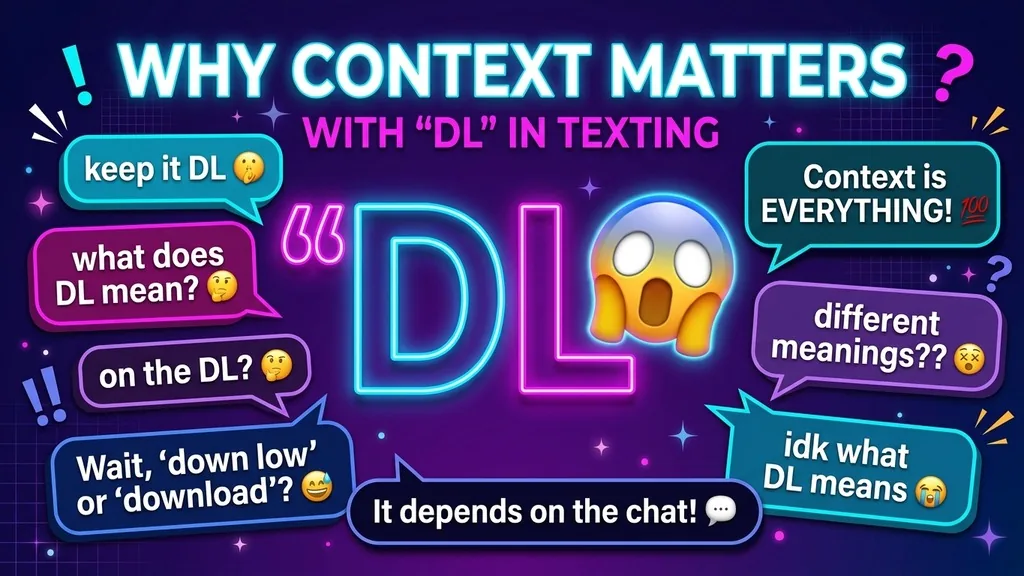
The same two letters can carry very different meanings. Consider the difference between “What’s the DL on the party?” and “He lives on the DL.” The first sentence probably asks for information or the latest details. The second may suggest that someone keeps part of their life private.
Relationship conversations need extra care. People sometimes use “DL” to describe a man who has a public relationship with a woman but privately dates or has sex with men.
That meaning is often discussed in connection with stigma, denial, fear of rejection, and pressure to appear straight. Still, the label can be unfair when outsiders apply it without knowing the facts.
Some people use “DL” for privacy without any connection to sexual identity. A person may keep a relationship private because of strict parents, a workplace rule, a public-facing job, or safety concerns.
A celebrity, teacher, or community leader may also avoid sharing personal details online. In these cases, “down-low” simply means discreet.
Pay attention to tone, too. “Keep it DL” may sound playful between friends, but it can feel controlling in a relationship. “He’s on the DL” may be neutral in one group and insulting in another. The speaker’s intent, the listener’s relationship with that person, and the subject being discussed all affect the meaning.
Examples of DL in Text
These examples show several common uses of the abbreviation:
- Private information: “I have news about the job, but keep it on the DL.” Here, DL means confidential or private.
- Details: “What’s the DL for Saturday?” In this message, DL means the details or current information.
- Private dating: “They are keeping their relationship on the DL.” This suggests that the couple does not want others to know yet.
- Hidden sexual relationships: “People are saying he is on the DL.” This may refer to rumors about private relationships with men, but the sentence does not prove that the rumors are true.
- Download: “The DL link is in the email.” In a technical conversation, DL may be short for download.
- Driving license: “Bring your DL when you pick up the rental car.” This use is more common in some regions than others.
Short conversations can make the meaning clearer:
Text 1: “Are you telling anyone about the new apartment?”
“Not yet. It’s on the DL until the lease is signed.”
Text 2: “What’s the DL on the concert?”
“Doors open at seven, and tickets are almost gone.”
Text 3: “Why does everyone say he is on the DL?”
“I’m not sure. We should not repeat rumors about his private life.”
The third example shows an important point: using “DL” in a rumor can spread an allegation about a person’s sexuality or relationships. It is better to avoid presenting gossip as fact.
DL on Social Media and Messaging Apps
On WhatsApp, iMessage, and ordinary text messages, “DL” often appears in phrases such as “on the DL” or “keep it DL.” People use it when they want a conversation, plan, relationship, or personal detail to remain private. A close friend may understand the phrase immediately, while someone from another age group or region may need more context.
On TikTok and Instagram, “DL” can appear in captions, comments, and discussions about dating. Users may describe a person as “DL” when talking about a hidden relationship or a man who privately dates men while publicly presenting as straight. Because social media spreads short labels quickly, the word can become judgmental or misleading.
On Reddit and Discord, the term may appear in longer discussions about sexuality, relationships, identity, or community experiences. Some users discuss the pressure that can lead people to hide parts of their lives.
These conversations may include topics such as homophobia, family expectations, religious pressure, HIV awareness, and sexual health. The term may also be used casually, without any serious reference to identity.
On professional platforms or school group chats, DL may have a different meaning. “Please DL the worksheet” may mean download it. In an online class, DL can mean distance learning. This is why a social media meaning should not automatically be carried into every digital setting.
DL and Private Relationships
In relationship talk, “DL” often points to secrecy rather than a specific identity. A couple may keep dating private because the relationship is new.
Someone may avoid public posts because of a past breakup, family conflict, or workplace concerns. Privacy is not always deception.
The meaning becomes more sensitive when people use “DL” to describe a man who has relationships with both women and men but does not openly identify as gay or bisexual. Some people use the phrase to discuss real experiences of hidden relationships. Others use it as an insult or as a way to expose someone without consent.
There can be serious reasons why a person does not share their identity. They may fear losing housing, work, family support, or community ties. Some people live in places where being openly queer can create danger.
Others are still working out how they understand themselves. A label cannot show the full story.
At the same time, secrecy can affect partners. A woman or man who does not know about a partner’s other relationships may face emotional or sexual health risks.
Honest communication, consent, testing, and safer-sex practices matter in every relationship. HIV prevention and regular sexual health care should be discussed without shame or assumptions.
Origin and Cultural Use of the Term
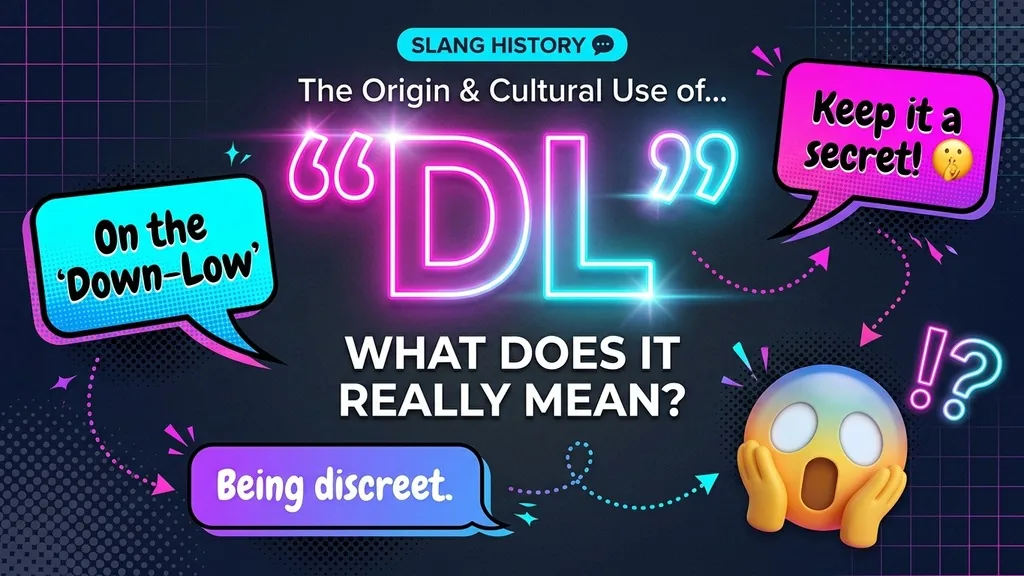
“Down-low” is an older phrase for something hidden or kept secret. Its modern slang use became especially visible in discussions of Black and African-American men who had sex with men but did not openly identify as gay. Media reports, books, and public debates often presented the subject as a social and health issue.
Some early coverage connected men on the down-low with HIV transmission. That coverage was criticized because it sometimes placed blame on Black men and treated a complex issue as if it had one cause.
HIV can affect people of every race, gender, and sexual identity. Prevention depends on access to testing, treatment, condoms, PrEP, and accurate information, not on stereotypes.
The term also has a history inside communities. Some people use it to describe the pressure of living between public expectations and private feelings.
Others reject it because they feel it turns a person’s identity into gossip. A person may prefer “closeted,” “not out,” “bisexual,” “queer,” or no label at all.
Language changes over time. A term that appears in a book, song, or online post may not carry the same meaning for every generation. The safest approach is to ask what the speaker means instead of assuming that a slang definition fits.
Common Misunderstandings About DL
One common mistake is assuming that every use of “DL” refers to gay men or hidden sex. In many messages, it only means private information. “Keep the party plans on the DL” has no clear connection to sexuality.
Another mistake is assuming that a person described as “DL” has a confirmed identity or behavior. The word may come from a rumor, a personal opinion, or an insult. It should not be used to “out” someone or reveal private information without permission.
People also confuse privacy with dishonesty. A person can have a private life without misleading anyone.
On the other hand, secrecy about a partner, sexual contact, or health information can become harmful when it prevents informed consent. The facts and the effect on other people matter more than the label itself.
A final misunderstanding is that “DL” has one universal definition. Slang differs by country, age group, online community, and subject. The best interpretation comes from the complete sentence and the conversation around it.
Similar Terms and Abbreviations
Several words and abbreviations can look or sound similar to “DL.” Their meanings are not interchangeable:
| Term | Meaning | Difference |
|---|---|---|
| Down-low | Private, hidden, or discreet | Usually the slang meaning of DL; sometimes linked to hidden relationships |
| Closeted | Not openly sharing a sexual or gender identity | More directly relates to identity than the broader term DL |
| Secret | Something intentionally kept from others | General word with no special connection to sexuality |
| Low-key | Quiet, relaxed, or not heavily publicized | Can mean casual or subtle, not necessarily hidden |
| DM | Direct message | Refers to a private message on a social platform |
| DL as download | To save a file or application | Technical meaning, unrelated to slang |
“Low-key” is especially easy to confuse with “down-low.” If someone says, “I low-key like that song,” they usually mean they quietly or somewhat like it. If someone says, “Keep it on the DL,” they usually mean do not share the information.
How to Reply
Your reply should match the meaning and the level of sensitivity. If “DL” means private information, a simple response works:
- “Sure, I won’t tell anyone.”
- “Got it. I’ll keep this private.”
- “Who needs to know?”
If you are unsure what the person means, ask a short question rather than guessing:
- “Do you mean keep it private?”
- “When you say DL, do you mean the details?”
- “Are you talking about a download?”
If someone uses “DL” to spread a rumor about another person, do not help circulate it. You could say, “We should not speculate about someone’s private life,” or “Unless they told us directly, we do not know that.” This protects privacy and reduces harmful gossip.
If a partner says they are keeping the relationship on the DL, ask what that means in practice. You might discuss who knows, how long the privacy will last, whether both people agree, and whether the arrangement affects trust or safety. A calm conversation is more useful than accusing someone based on slang.
FAQs
What does DL mean in slang?
DL usually means “down-low,” or private and hidden. In some conversations, it refers to hidden romantic or sexual relationships.
What does DL mean in chat?
In chat, DL may mean “down-low,” “details,” or “download.” Read the surrounding words to identify the intended meaning.
What does DL mean from a girl?
If a girl uses DL, she may mean “keep this private,” “what are the details,” or another local slang meaning. Her gender does not determine the definition.
Does DL always mean a man is gay?
No. It can describe privacy, secrecy, or a hidden relationship, but it does not prove a person’s sexual identity or behavior.
What does “keep it on the DL” mean?
It means to keep something confidential or avoid telling other people. The subject could be a plan, relationship, personal detail, or rumor.
Conclusion
“DL” most often means “down-low” in slang, especially when people discuss privacy or hidden relationships. Yet it can also mean details, download, driving license, or distance learning.
The sensitive relationship meaning should be handled with care. It does not prove that someone is gay, bisexual, queer, dishonest, or hiding a particular sex life, and it should never be used to spread an unconfirmed allegation.
When the meaning is unclear, look at the full message or ask politely. A little context can prevent confusion, gossip, and unfair assumptions.