
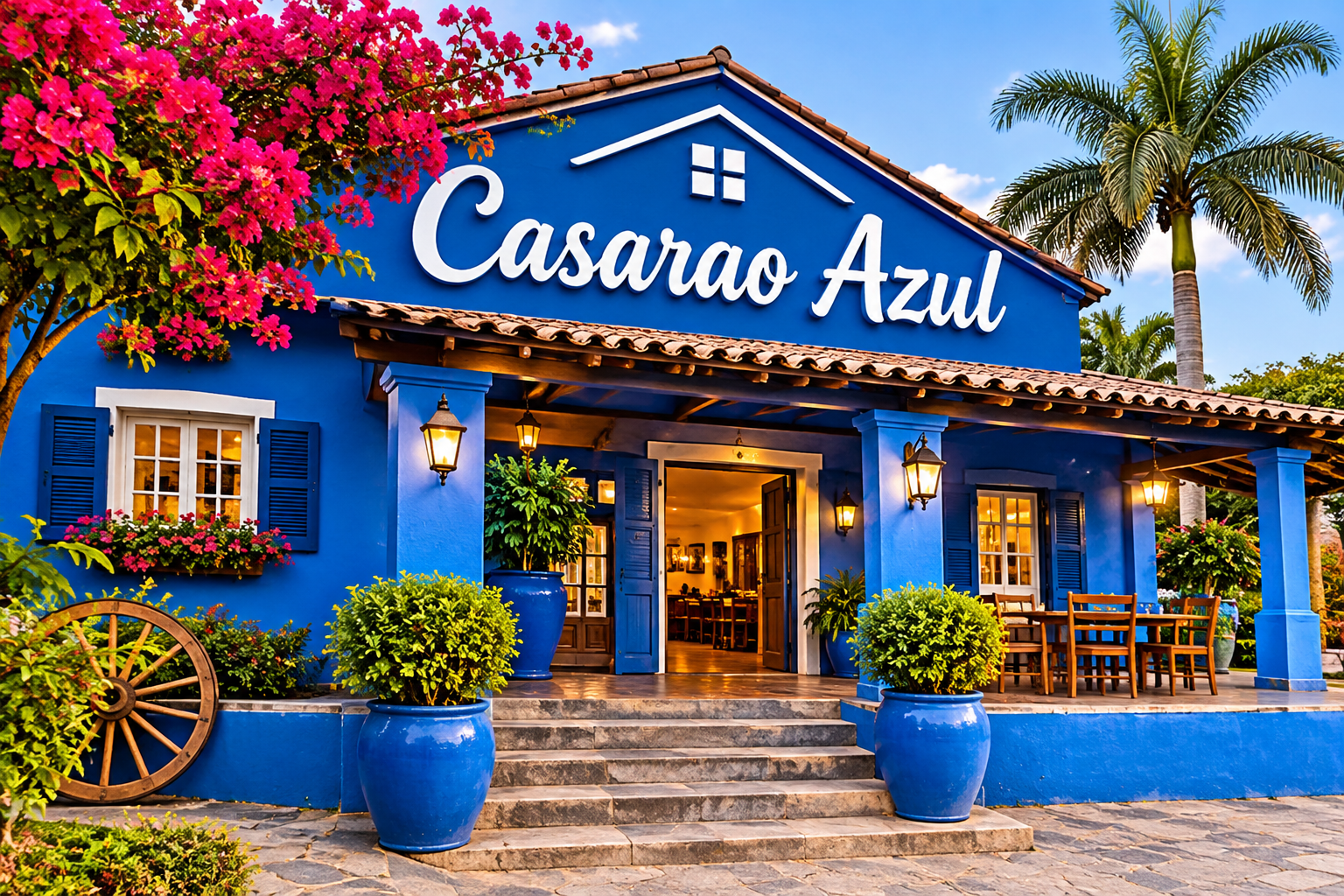
Casarao Azul is a fascinating name that immediately brings to mind beautiful architecture, traditional Brazilian homes, and buildings filled with history. The Portuguese expression translates roughly to “Blue Mansion” or “Large Blue House.” Although the name sounds simple, it represents an interesting connection between architecture, cultural identity, and the preservation of historical places.
One of the best-known historic buildings associated with this name is located in Planaltina, an administrative region of Brazil’s Federal District. This particular property has attracted attention because of its distinctive appearance, traditional construction techniques, and connection to a notable local physician and political figure, Dr. Hosannah de Campos Guimarães.
The story of Casarao Azul is not limited to its blue exterior. Its historical background provides a glimpse into how Brazilian communities developed, how traditional houses were constructed, and how important buildings became part of local cultural identity.
Whether you are researching Brazilian architecture, exploring historic destinations, or simply curious about the meaning of Casarao Azul, understanding its background reveals why this name continues to attract attention.
What Is Casarao Azul?
Casarao Azul is a Portuguese expression combining two words: casarão, meaning a large house or mansion, and azul, meaning blue. Together, they describe a large blue-colored residence.
In Brazil, the term casarão is often associated with older residential buildings that reflect traditional architectural styles. Such properties may feature spacious rooms, decorative windows, traditional construction materials, and distinctive exterior designs.
The historic Casarão Azul in Planaltina is particularly interesting because it represents more than an attractive residential property. It is associated with the development of the local community and the life of Dr. Hosannah Guimarães.
Academic research identifies the building as his former residence and medical consulting location. This connection gives the property historical importance beyond its architectural appearance.
However, it is worth understanding that Casarao Azul is not the exclusive name of one building. Other properties in Brazil also use similar names. Therefore, the historic residence in Planaltina should be distinguished from holiday homes, accommodation businesses, and other buildings carrying the same name.
Where Is Casarao Azul Located?
The historic Casarao Azul is situated in Planaltina, within Brazil’s Federal District, known in Portuguese as Distrito Federal.
Its documented address is Avenida Salvador Coelho, Quadra 57, Lote 141, in the traditional historic area of Planaltina. The surrounding neighborhood is important because it contains buildings and public spaces connected to the area’s earlier development.
Planaltina has a much older history than Brasília, Brazil’s modern capital. Its traditional urban environment preserves elements of an earlier period, making it an interesting location for people studying regional architecture and cultural heritage.
The building’s location also helps explain its historical significance. Rather than standing as an isolated architectural attraction, it forms part of a wider environment shaped by generations of residents, local institutions, and changing lifestyles.
Anyone interested in visiting should verify the current address and public-access arrangements before making travel plans. Historical importance does not automatically mean that a privately owned building operates as a museum or welcomes visitors.
The Historical Background of Casarao Azul
The history of Casarao Azul is closely connected with the development of Planaltina during the early twentieth century.
Research into the property indicates that it developed through different construction phases. Some academic work places its original development around 1921, while architectural research identifies 1926 as an important date associated with its brick façade.
These dates should not necessarily be treated as contradictory. They may refer to different stages in the building’s development rather than one single construction event.
Over the years, the property experienced changes in appearance and use. Like many older Brazilian residences, it reflects a period when homes frequently served several purposes depending on the needs of their occupants and the surrounding community.
Its historical association with Dr. Hosannah Guimarães makes the building particularly interesting. His medical activities connected the residence with the everyday lives of local people who needed healthcare.
The building therefore offers an opportunity to explore both residential architecture and the social history of Planaltina.
Dr. Hosannah Guimarães and His Connection to the Property
One of the most important aspects of Casarao Azul is its connection with Dr. Hosannah de Campos Guimarães.
He was a physician from Planaltina who later became an influential political figure in the state of Goiás. His professional career connected healthcare with public service, making him an important personality in the region’s history.
According to academic research, Dr. Hosannah used the property as his residence and a place where he provided medical consultations. At a time when access to healthcare could be difficult for people living outside major urban centers, the presence of a local physician was especially valuable.
His association with the house gives Casarao Azul a human story. Instead of being remembered only as an old building, the property represents a connection between a professional who served his community and the people who depended on local medical services.
Dr. Hosannah also pursued a political career. He held important public positions, including serving as governor of Goiás. His achievements helped establish his place in the region’s historical memory.
The relationship between the physician and the property is documented in research conducted by the University of Brasília. The study identifies the building as his former residence and medical consulting location.
It is important, however, to distinguish documented medical consultations from stories suggesting that the building operated as a formal hospital. The available historical material does not establish that it was officially a hospital.
Architectural Features of Casarao Azul
Architecture is another reason Casarao Azul attracts attention. Its construction reflects traditional techniques and materials that were commonly used in earlier Brazilian buildings.
Research into the property identifies an interesting combination of adobe construction and fired-brick elements.
1. Traditional Adobe Construction
Adobe is a traditional building material made primarily from earth, water, and other natural components. It has been used in many parts of the world for centuries.
In Brazil, adobe construction became an important part of traditional architecture, particularly in areas where locally available materials influenced building methods.
The use of adobe in Casarao Azul connects the property with these older construction traditions. It also demonstrates how builders adapted available resources to create practical residential structures.
2. Fired-Brick Exterior
Another interesting characteristic is the building’s fired-brick façade.
Fired bricks are produced by shaping clay and heating it at high temperatures. This process creates durable construction materials that can provide structural strength and a distinctive appearance.
The research identifying the brick façade’s development around 1926 provides an important clue about the property’s architectural evolution.
The combination of adobe walls and brick elements makes Casarao Azul an interesting example of how different building techniques could exist within the same structure.
3. Windows and Exterior Design
The building’s exterior appearance contributes to its recognizable identity.
Its traditional windows, architectural proportions, and changing façade details reflect the residential styles of an earlier period. Historical photographs also help researchers understand how its appearance has evolved.
Rather than assuming that the building has remained unchanged, it is more accurate to recognize that renovations, alterations, and different uses have influenced its appearance over time.
4. Changes in the Building’s Structure
Casarao Azul has experienced several physical and functional changes throughout its history.
Academic research documents different uses, including residential accommodation, medical consultation, and hotel-related activity.
These changes demonstrate how historic buildings can adapt to changing economic and social conditions. However, alterations can also create challenges for preservation because original architectural features may disappear or become difficult to identify.
Why Is Casarao Azul Culturally Important?
Historic buildings are valuable because they preserve evidence of earlier generations. They help communities understand how people lived, worked, interacted, and developed their surroundings.
Casarao Azul represents several aspects of Planaltina’s cultural history.
First, its construction materials provide information about traditional Brazilian building practices. Researchers can examine its adobe elements, brick façade, and architectural modifications to understand how construction methods changed over time.
Second, its association with Dr. Hosannah Guimarães connects the property with local healthcare and political history.
Third, its position within Planaltina’s traditional urban area makes it part of a wider historical landscape. The surrounding streets, public squares, and older buildings contribute to the cultural identity of the community.
There is also a social dimension to preservation. Local residents and heritage enthusiasts have expressed interest in protecting older buildings because they represent memories that cannot easily be recreated once the original structures disappear.
Casarao Azul therefore provides an example of why architectural conservation matters. Preserving a historic building is not simply about maintaining an attractive exterior. It is about protecting the stories and experiences connected to that place.
The Importance of Preserving Historic Buildings
Preserving historic architecture is a responsibility shared by communities, researchers, property owners, and public institutions.
Buildings such as Casarao Azul can deteriorate when they are not maintained properly. Weather conditions, moisture, structural problems, and unsuitable renovation techniques can gradually damage older materials.
Traditional construction requires particular attention. For example, adobe walls may respond differently to moisture and modern construction materials. Using inappropriate repair methods can create additional problems.
Effective preservation generally involves several important steps:
- Historical research: Understanding the building’s original design, construction phases, and previous uses.
- Architectural documentation: Recording dimensions, materials, photographs, and structural features.
- Careful restoration: Repairing damaged areas while respecting original construction methods.
- Community involvement: Encouraging residents to participate in conversations about local heritage.
- Long-term maintenance: Monitoring the building regularly to identify problems before they become serious.
Casarao Azul demonstrates why these efforts matter. Without proper documentation and maintenance, important architectural details and historical information may gradually disappear.
It is also important not to confuse historical recognition with formal legal protection. A building can have considerable cultural value without necessarily having an individually confirmed heritage designation.
Casarao Azul and Planaltina’s Local Identity
Planaltina is an important part of the historical landscape of Brazil’s Federal District. Although Brasília receives considerable international attention because of its modernist architecture and political importance, Planaltina offers a different perspective on the region’s past.
Its traditional streets and historic buildings reveal a community that developed before Brasília became Brazil’s capital in 1960.
Casarao Azul contributes to this identity by representing an earlier period of residential life. Its history connects architecture, healthcare, family heritage, and local development.
For residents, buildings like this can serve as reminders of the people and events that shaped their community. They also provide younger generations with opportunities to learn about local history through physical places rather than written accounts alone.
The importance of Casarao Azul becomes clearer when viewed alongside other historic buildings in Planaltina. Together, these structures create a broader picture of how the community developed over time.
Other Places Known as Casarao Azul
An important detail for anyone researching this keyword is that several unrelated Brazilian properties use the name Casarao Azul or a similar Portuguese spelling.
These properties should not be confused with the historic Planaltina residence.
Some examples include:
| Location | Connection with the name |
|---|---|
| Planaltina, Federal District | Historic residence associated with Dr. Hosannah Guimarães |
| Paraty, Rio de Janeiro | Holiday accommodation using the name |
| Doutor Pedrinho, Santa Catarina | Accommodation property with a similar name |
| São José dos Ausentes, Rio Grande do Sul | Historic property associated with a former German school |
Each location has its own background and characteristics. For example, a holiday rental in Paraty should not be confused with the historic residence in Planaltina.
This distinction is particularly important for travelers and researchers. Before relying on photographs, accommodation details, historical information, or visitor reviews, it is useful to confirm the exact location being discussed.
Is Casarao Azul Worth Exploring?
For people interested in Brazilian history and traditional architecture, Casarao Azul is an interesting subject.
Its importance comes from several different elements rather than one particular attraction. The property has an identifiable architectural history, a connection with an influential physician, and a place within Planaltina’s older urban environment.
Architecture enthusiasts may find its combination of adobe and fired-brick construction especially interesting. History researchers may appreciate its association with Dr. Hosannah Guimarães, while visitors interested in cultural heritage may enjoy learning about the development of Planaltina.
However, people planning an actual visit should confirm whether the property is accessible. Available historical research does not establish regular museum opening hours or guaranteed public tours.
Even when interior access is unavailable, learning about the building’s history can help visitors appreciate the wider cultural landscape of the region.
Frequently Asked Questions About Casarao Azul
1. What does Casarao Azul mean?
Casarao Azul is a Portuguese expression that translates approximately to Blue Mansion or Large Blue House. The word casarão describes a large house, while azul means blue.
2. Where is the historic Casarao Azul located?
The historic property discussed in this article is located in Planaltina, within Brazil’s Federal District. Its documented address is Avenida Salvador Coelho, Quadra 57, Lote 141.
3. Who was Dr. Hosannah Guimarães?
Dr. Hosannah de Campos Guimarães was a physician and political figure associated with Planaltina and the state of Goiás. He used Casarao Azul as his residence and a location for medical consultations. He later held important political positions, including governor of Goiás.
4. When was Casarao Azul built?
The exact construction history involves different stages. Some academic research places its original development around 1921, while architectural research identifies 1926 as an important date for its fired-brick façade.
5. What materials were used to construct Casarao Azul?
Research identifies adobe walls and fired-brick elements. These materials demonstrate a combination of traditional construction techniques and later architectural development.
6. Was Casarao Azul originally a hospital?
The property is associated with Dr. Hosannah’s medical consultations. Some local accounts suggest that it may have had a hospital-related use, but the available evidence does not conclusively establish that it operated as a formal hospital.
7. Can tourists visit Casarao Azul?
Public access and regular visiting arrangements have not been reliably established. Anyone interested in seeing the building should confirm its current status before visiting and respect private property restrictions.
8. Why is Casarao Azul historically significant?
Its importance comes from its traditional architecture, association with Dr. Hosannah Guimarães, connection to local medical history, and contribution to Planaltina’s cultural heritage.
9. Are there other properties with the same name?
Yes. Several properties across Brazil use the name Casarão Azul. Some are holiday accommodations, while others have their own historical or cultural backgrounds.
Conclusion
Casarao Azul is much more than a name associated with a blue-colored house. The historic property in Planaltina represents an interesting combination of Brazilian architectural traditions, local history, and cultural identity.
Its connection with Dr. Hosannah Guimarães adds a meaningful human dimension to its story, while its adobe construction and fired-brick façade provide valuable insight into traditional building techniques.
The property’s changing uses also demonstrate how historic buildings adapt to different generations and community needs. At the same time, its story highlights the importance of preserving architectural heritage before important details are permanently lost.
Although several Brazilian properties share the name Casarao Azul, the historic residence in Planaltina remains a particularly interesting example of how one building can reflect the development of an entire community.
For anyone interested in Brazilian architecture, cultural preservation, or regional history, Casarao Azul offers a fascinating subject worth exploring.