
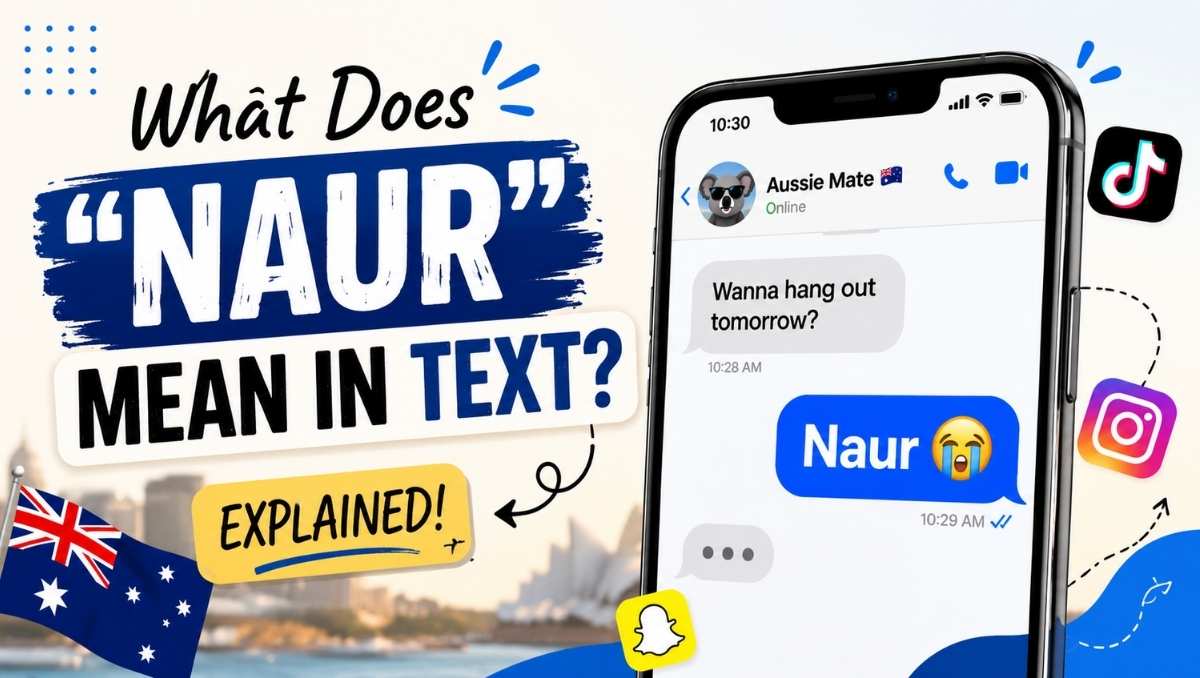
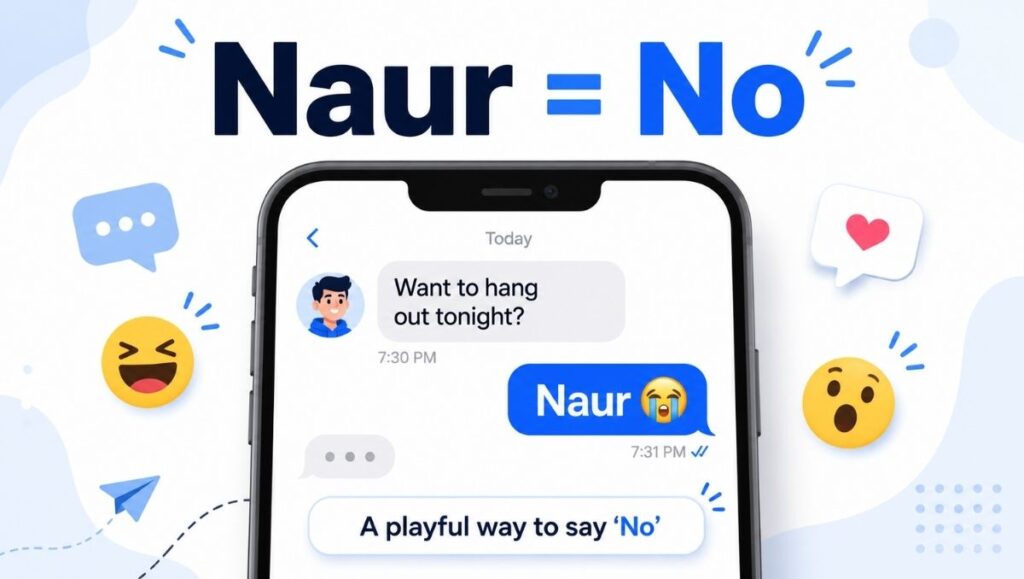
Naur means “no”, written the way many Australians pronounce it. It is not a new word with a secret definition, it is a playful spelling that turns a plain refusal into a small performance.
You have probably seen it in TikTok comments, memes, or dramatic group chat replies. Someone drops a “naurrr” under bad news, and everyone instantly knows the vibe.
This guide covers what naur means, how to say it, where it came from, and how to use it without sounding forced.
Quick Answer
The naur meaning in text is simply “no”, spelled to imitate the Australian pronunciation of the word. It is used online for funny, dramatic, or over the top refusals, and it almost always carries a playful tone rather than a serious one.
Naur Meaning at a Glance
| Detail | What It Is |
|---|---|
| Meaning | No, with drama |
| Origin | Australian pronunciation, TikTok meme |
| Tone | Playful, dramatic, sarcastic |
| Common platforms | TikTok, X, Instagram, Snapchat, Discord |
| Formality | Very casual, never formal |
| Is it an acronym? | No, it is a phonetic spelling |
How to Pronounce Naur
Naur is pronounced “NAW-uh”. Start with “naw” as in “gnaw”, then add a soft “uh” at the end.
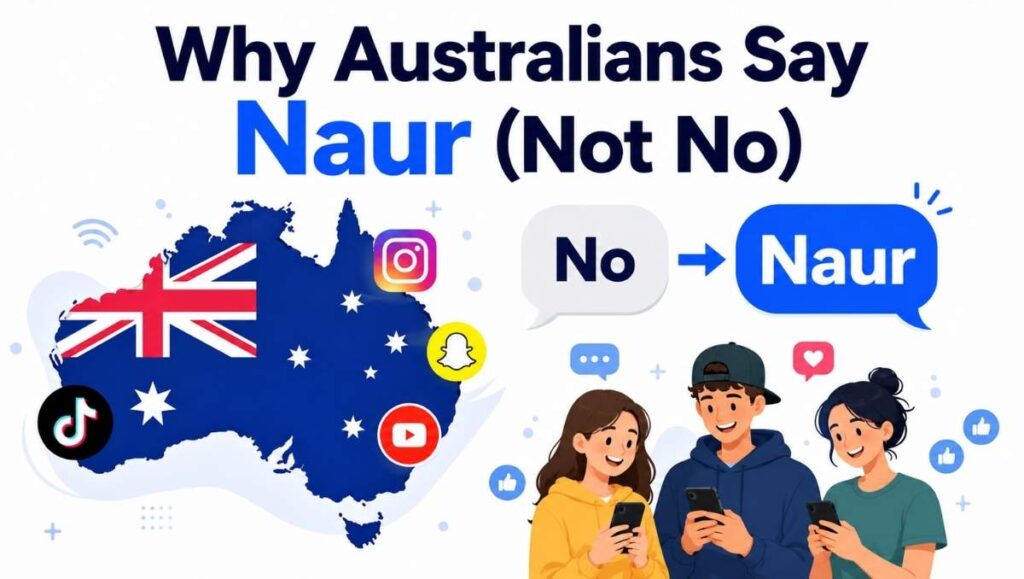
The sound is drawn out and relaxed, very different from the sharp American “no”. That stretched vowel is the whole joke, because it mimics how “no” sounds in Australian English.
When people type “naurrr” with extra letters, they are stretching that same sound even further. More letters mean more drama, not a different word.
Where Did Naur Come From?
Naur started on TikTok as a meme about the Australian accent. Creators exaggerated how “no” sounds in Australia, and the spelling stuck.
The joke spread through sound duets, captions, and reaction videos. Soon people far outside Australia were typing “naur” for any dramatic denial, even if they had never met an Australian.
It moved from video captions into everyday comments, then into group chats and memes. What began as an ironic impression became a genuine piece of internet slang.
That path is common for meme slang. A joke gets repeated until the joke itself becomes the normal word for the feeling.
Naur Forms and Variations
Adding letters changes the size of the reaction, not the meaning. Each form has its own energy.
| Form | Vibe | Example |
|---|---|---|
| Naur | Standard dramatic no | “Naur, I am not going.” |
| Naurrr | Extra dramatic reaction | “Naurrr, they canceled the show!” |
| Naur way | No way, in the accent | “Naur way this happened.” |
| Naur naur naur | Total refusal, repeated | “Naur naur naur, absolutely not.” |
| Nawr | Alternative spelling | “Nawr, don’t leave me!” |
The repeated form is the strongest. Saying it three times turns a refusal into a full scene, which is why it shows up in memes and fan edits so often.
What Tone Does Naur Carry?
Naur is never a flat, serious no. It always adds personality, and the exact flavor depends on the moment.
As a dramatic refusal, it turns bad news into comedy. “Naurrr, my favorite character died again” is sad and funny at the same time.
As sarcasm, it mocks over the top reactions. Replying “Oh naur, it was absolutely thrilling” to a boring meeting is clearly not sincere.
As shock or disbelief, it replaces “no way”. “Naur way! They got engaged after two weeks?” reads as surprise, not refusal.
As mock horror, it plays up tiny disasters. “Naur, not my iced coffee spilling” is a joke about a small problem, not a real crisis.
The common thread is performance. Naur is the version of “no” you type when you want an audience reaction, even if the audience is just your group chat.
Naur vs a Plain No
A plain “no” ends a conversation, while “naur” invites a reaction. That difference decides which one fits.
“No” is neutral, clear, and final. It works everywhere, from work chats to serious talks, because it carries no extra tone.
“Naur” is cute, bratty, ironic, or dramatic depending on who reads it. It can sound funny in the right crowd and performative in the wrong one.
Use “no” when the answer needs to be taken seriously. Use “naur” when the moment is light and everyone knows you are playing it up.
One more difference matters. A plain “no” rarely gets a reply on its own, but “naur” often does, because people react to the drama in it.
How to Use Naur Online
Naur fits reactions, captions, and memes better than real conversations. It is built for public, playful moments.
In comments, it works as a one word reaction. “naur way this happened” under a wild video says everything without an explanation.
In replies, it answers a dramatic story with matching drama. A friend shares bad news, you reply “naur”, and the joke lands.
In captions, it sets the tone before anyone reads further. “Me when the bill arrives: naur” tells followers the post is a joke.
In memes, it pairs with a screenshot of bad news. The image does the storytelling, and “naur” does the reacting.
A fun stacking trick is pairing it with “bffr” for a double denial. “naur, bffr, you did not just say that” rejects something completely in one line.
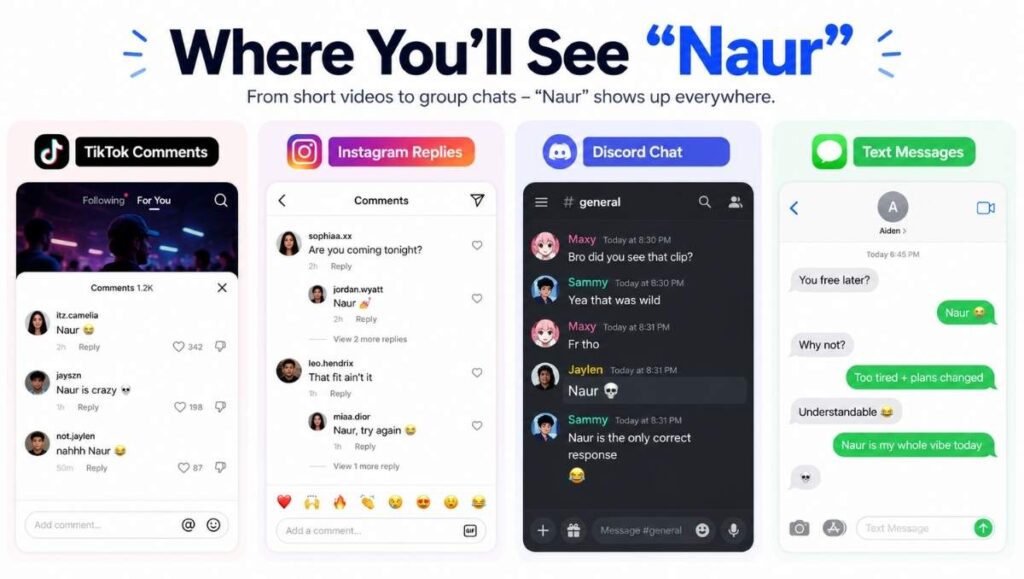
Naur on TikTok, Instagram, X, and Snapchat
The meaning stays the same on every platform, but the packaging changes. Each app leans into a different side of naur.
TikTok is where naur was born, and it still lives there most naturally. Comments, captions, and sound duets all use it as a dramatic reaction.
On Instagram, naur shows up in story replies and meme captions. It works best under emotional or funny content, like fan edits and reaction posts.
On X, naur fits short, witty replies. A sarcastic “naur” under a wild take reads as instant commentary.
On Snapchat and Discord, naur stays inside friend groups. It is a private joke more than a public post, which makes it feel more natural.
Wherever you use it, keep it light. Naur in a serious thread will look out of place, because the word itself promises a joke.
Naur as “Know” Wordplay
Because “no” and “know” sound alike, some people swap in “naur” for “know” too. This is wordplay, not a second definition.
Example: “I don’t naur why she did that.” The sentence means “I don’t know”, written with the same exaggerated accent.
This usage is rarer and more niche. Most readers will still read “naur” as “no” first, so use the “know” version only with people who already know the joke.
If someone looks confused, the plain word “know” will clear it up instantly. The joke is not worth a misunderstanding.
Who Uses Naur?
Gen Z and TikTok users drive naur, with meme communities close behind. Social media creators use it to sound current and relatable.
Casual texters pick it up from comments and captions. Once it appears in a friend group, it spreads fast because it is easy to copy.
Older generations use it less, and usually only after seeing it online. When they do, it is often with a self aware joke about sounding young.
Brands sometimes use naur too, but only the ones that already post humor. A bakery posting “Naur we just ran out of cookies again” works, because the tone already fits.
When Not to Use Naur
Naur does not belong in serious or formal messages. The drama that makes it funny also makes it wrong for certain moments.
Avoid it in work emails, job chats, and professional messages. A manager reading “naur” will not hear a joke, they will hear a lack of seriousness.
Avoid it when someone shares real bad news. A dramatic “naurrr” under a genuine crisis can feel dismissive, even if you meant to be light.
Avoid it with people who do not know internet slang. They may read it as a typo, a name, or a word they do not recognize, and the joke will be lost.
When in doubt, use “no”. It is always understood, and it never needs an explanation.
Using Naur Respectfully
Naur imitates a real accent, so use it for fun, not mockery. Most Australians find it harmless and funny, but the line matters.
Good practice means appreciating the culture behind the joke and understanding that it is real speech, not just a meme. It is fine to enjoy the sound of it.
What crosses the line is exaggerating it to mock how Australians speak, or stereotyping all Australians with it. Over the top fake accents aimed at people are different from a playful word in a meme.
Keep it about the joke, not about the people. That is the version of naur that everyone can enjoy.
Common Misunderstandings About Naur
Is naur an acronym? No. Unlike LOL or BRB, naur does not stand for a phrase. It is a phonetic spelling of “no”.
Is naur a real word? Not in the dictionary sense. It is internet slang that grew out of a pronunciation meme, and repeated use made it a real part of online language.
Do Australians actually say naur? They do not consciously say “naur”. That is simply how “no” sounds in Australian English, with its distinctive vowel shift, and non Australians hear it that way.
Is naur only for girls? No. Anyone can use it, and the tone matters far more than who types it.
Does naur ever mean yes? No. It always leans toward “no”, even when the tone is playful. If you need a yes, use a different word.
Similar Texting Slang
Naur sits in a family of dramatic internet reactions. These terms carry similar energy in chats.
| Slang | Meaning |
|---|---|
| IGHT | Alright, casual agreement |
| GNG | Going, on the move |
| FRFR | For real, for real, serious emphasis |
| WTM | What is the move, asking about plans |
| Nah | Casual no, less dramatic |
| Nope | Friendly no |
Related Aussie slang also travels with naur online. “Yeah, nah” actually means no, “nah, yeah” actually means yes, “arvo” means afternoon, and “servo” means a gas station. These all come from the same internet fascination with Australian speech.
FAQs
What does naur mean in texting? It means “no”, written in a playful way that imitates an Australian pronunciation. It is used for dramatic or funny refusals.
Where did naur come from? TikTok creators exaggerated the Australian pronunciation of “no”, and the spelling spread through captions, comments, and memes.
How do you pronounce naur? Say “NAW-uh”, with a drawn out first vowel and a soft ending. Extra letters like “naurrr” stretch it further.
Is naur rude? It can feel bratty or dismissive in a serious chat, but in casual meme contexts it reads as funny, not mean.
Can I use naur at work? Better not to. It is very casual slang, and it can look childish or unserious in a professional message.
Conclusion
Naur simply means “no”, but with extra personality. Popularized by TikTok and meme culture, it is a humorous spelling that turns a refusal into a performance.
Use it when the moment is light, the crowd knows the joke, and a plain “no” would feel too flat. Skip it when the message needs to be serious, because the drama is the whole point of the word.
The next time bad news drops in the group chat, you will know exactly when a simple “naur” says more than a paragraph could. Just do not forget to recieve the joke in the spirit it was sent.